
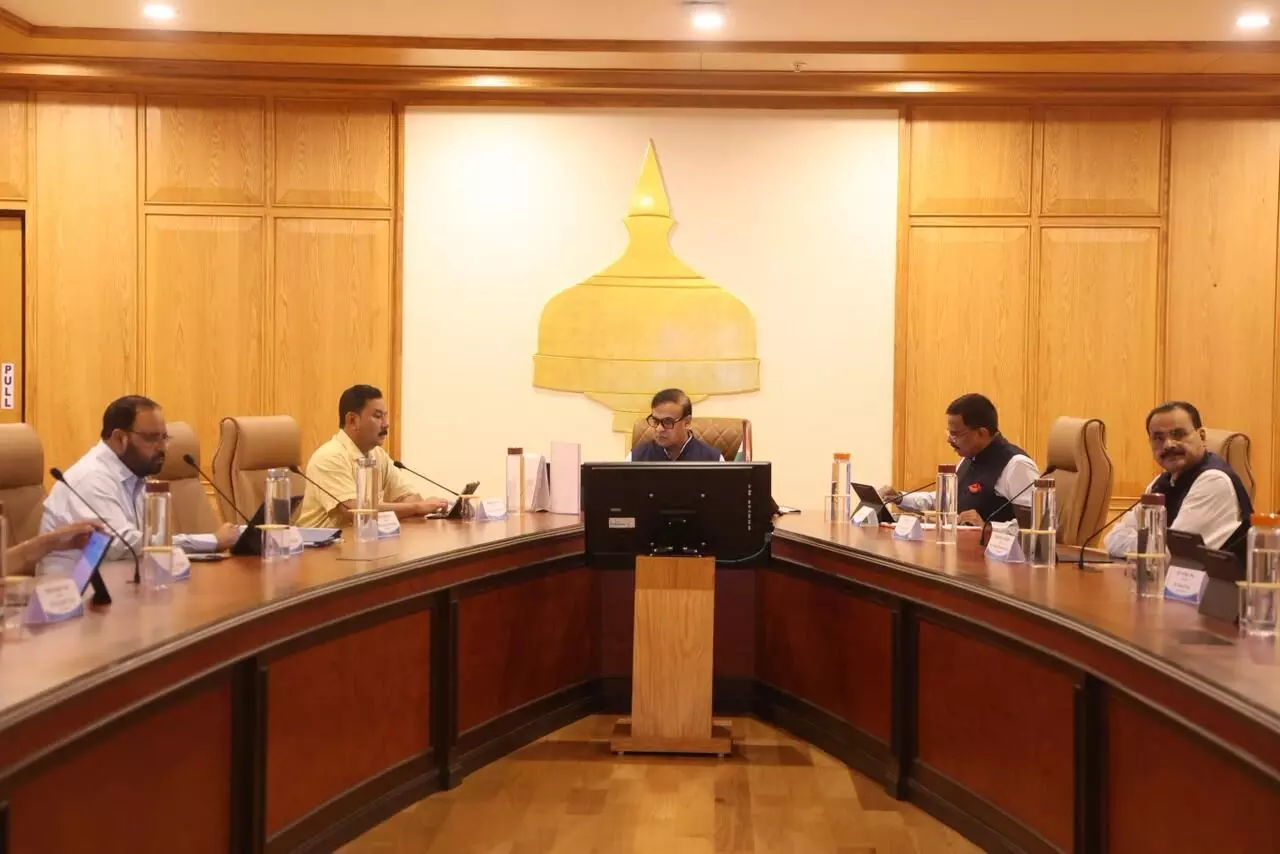
A file image of a Cabinet Meeting held in Guwahati.
The State Cabinet’s decision to reserve a certain percentage of seats in medical colleges for students who had studied in educational institutions outside Assam seeks to rationalise the admission process.
The move makes sense, as many people from Assam stay outside the State in connection with their jobs, requiring their wards to pursue education outside. Earlier also, the State government had reserved five percent seats in medical and engineering colleges for students who studied in State board-affiliated government schools.
It was aimed as an incentive to attract students to government-run schools, but reversing the downward slide of public education in the State will require much more from the government than such cosmetic surgeries. More than anything else, it is several decades of underperformance by government schools that lies at the root of the mass disenchantment with public education. It will, therefore, need a sustained and sincere focus by the authorities to put the ailing public education system back on the rails.
A lot needs to be done to streamline the spheres of medical education and medical service delivery. The shortage of doctors continues to be a pressing problem, hindering the growth of the sector. Even today, many hospitals are running with a skeletal staff of doctors and paramedics.
With Assam adding several medical colleges and medical college and hospitals in recent years, both medical education and healthcare infrastructure should get a much-needed push from these developments.
However, running the newly-established hospitals and institutions competently and professionally is another challenge, and one expects the authorities to be equal to the task. Many of our existing hospitals continue to function in a cavalier fashion, effectively hindering quality healthcare delivery. While we need enhanced and better medical care, merely giving a thrust on quantity without ensuring quality will frustrate the very purpose of setting up new units.
Healthcare being a traditionally neglected area in the State, the priority accorded by the Centre on augmenting medical infrastructure in the region is welcome. Financial assistance apart, there have been special relaxations in the required criteria for setting up medical colleges in the Northeast. All this augurs well for the region’s beleaguered health sector and it is for the governments in the northeastern States to build on the liberal Central assistance.
Effective implementation of the different Centrally-sponsored programmes holds the key to effecting lasting changes in the health sector. The below-par status of healthcare in the State is borne out by the different health indices, which continue to be well below the national average.
Preventable diseases like malaria, encephalitis and gastroenteritis continue to extract heavy tolls year after year simply because some basic services are yet to reach the people. The task before the government is to bring the entire populace under standardised medical care.