
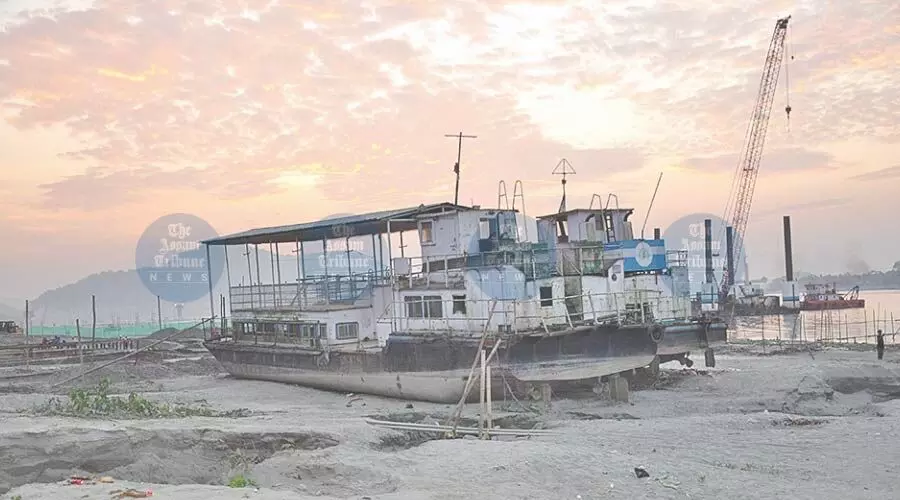
This year, the discharge of the Brahmaputra has drastically decreased, which could have significant consequences for the region’s fluvial geomorphology. Such a decline could destabilise the river’s channel, reduce its flood-carrying capacity, and disrupt the aquatic ecosystems that depend on it. Historically, the Brahmaputra’s discharge has been far higher.
For instance, in August 1962, the river’s peak discharge at Pandu reached 72,779 cubic metres per second (cumec), and on many occasions, the flow exceeded 70,000 cumec. However, this year’s discharge paints a stark contrast. Last year, the river’s discharge in July was approximately 38,000 cumec, but this year, it plummeted to just 17,000 cumec in the same month. This needs to be seen in the backdrop of the significant rainfall deficit in Assam, with a 44 percent shortfall recorded by the end of July 2025.
Forecasts by the IMD predict below-normal rainfall for Northeast India this monsoon. This is concerning, especially considering the current neutral El Niño-Southern Oscillation conditions in the Pacific Ocean, and the predicted weakly negative Indian Ocean Dipole (IOD) by the end of the monsoon season, both of which are expected to adversely impact rainfall in the region, exacerbating the already fragile hydrological balance.
The Brahmaputra’s flow is primarily fuelled by rainfall within India, with snowmelt contributing between 6 percent and 21 percent of the total annual flow. The diversion of river flow during the construction of China’s mega dam at the Great Bend could further disrupt stream flow in future lean seasons. This could lead to further complications for the river’s hydrology and sediment transport.
These changes are not just regional concerns; they reflect broader global trends in river hydrology. Many of the world’s major rivers are experiencing declining water discharges, a trend largely driven by climate change and human activities. While human activities account for about 25 percent of these changes, climatic factors, particularly rising global temperatures, play a much larger role in altering river flow patterns.
The frequency of extreme weather events like floods and droughts has risen significantly, further stressing the global hydrological cycle. The discharge of rivers into the oceans is a crucial part of the water cycle, linking terrestrial and oceanic processes. As climate change and human activities continue to influence river discharges, understanding these changes becomes vital for managing water resources and addressing the global water crisis.
To mitigate these effects, it is essential that policymakers consider both the impacts of climate change and the need for effective river restoration to ensure sustainable water management in the face of evolving environmental challenges.