
Draft Guwahati Master Plan 2045 sparks concerns on displacement, affordable housing location
Citizens urge GMDA to revise Guwahati Master Plan 2045, citing risks of inequity, and damage to wetlands among others
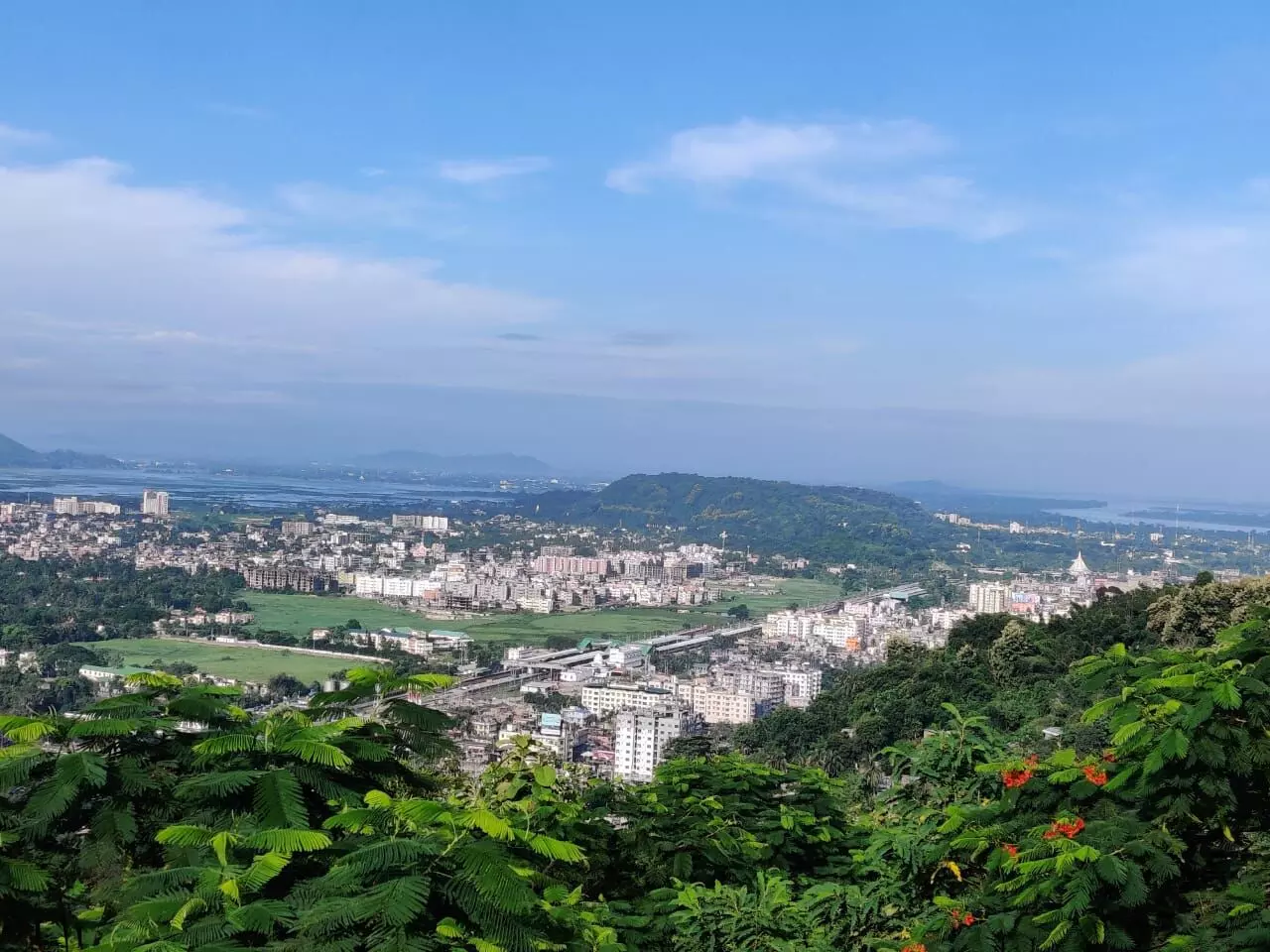
In August 2024, on a humid afternoon, as monsoon clouds hung low over Guwahati, a group of 45 people: planners, architects, activists, and academics, sat together with one shared anxiety: the future of their city. The Guwahati Metropolitan Development Authority (GMDA) in the beginning of 2024 released the Draft GIS-Based Master Plan 2045, intended to guide the city’s urban growth for the next two decades.
But for this Concerned Citizens Group, the plan raised more red flags than reassurance. Their message was simple: A city’s progress must not come at the cost of equity, ecology, and community voices.
A Plan That Risks Displacement
One of the key concerns raised relates to housing. The draft projects that Guwahati will require nearly 7.5 lakh new homes by 2045, with about half intended for economically weaker section (EWS) and lower-income group (LIG) families. However, land for these houses has been earmarked only in six peripheral villages – Singimari, Gundhmow, Matikutuni, Rajapanisanda, Deurali, and Lochana.
Participants noted that locating affordable housing solely on the outskirts could create challenges for daily wage earners and others who depend on proximity to workplaces. By concentrating EWS and LIG housing outside the urban core, the plan risks increasing commuting burdens and weakening access to livelihoods. Citizens emphasized the need for affordable housing to be integrated within the city, with clear demarcations on the Proposed Land Use (PLU) map.
Invisible Settlements, Ignored Realities
Another major concern is the needs of slums and informal settlements. The plan acknowledges that Guwahati has 217 slums – both notified and non-notified. But, only around 110 are shown on the PLU map. It has been also observed that there is some discrepancy in the existence of notified slums in the city as well according to relevant authorities.
If these settlements are not formally recognized, many residents may remain outside the coverage of basic services and welfare schemes.
The group has urged the authorities to accurately map every slum, ensure in-situ slum rehabilitation, and follow national guidelines that recognize informal areas distinctly. Without this, the promise of “Housing for All” is unlikely to be met.
Vendors Without a Place to Stand
Walk down any street in Guwahati and the presence of vendors is unmistakable: fruit sellers, tea stalls, clothes on display, and small eateries that serve thousands daily. Official estimates suggest nearly 30,000 vendors operate in the city.
In contrast, the Master Plan designates eight vending zones, with capacity for under 600 vendors. Thus, citizens suggest that the Master Plan should reflect the spatial planning components highlighted in the Street Vendors Act, 2014. They recommend basic amenities like drinking water, toilets, waste disposal units, and even creches for women vendors, which are currently missing in the draft. The Town Vending Committee (TVC) has already approved 71 vending zones. The group insists that all of them be included in the plan.
Where Are the Schools and Hospitals?
The Master Plan has significant scope for expanding the provision of basic amenities. The draft increases residential land use by 33%, from 86 to 113 sq. km, but adds only 10 sq. km for public and semi-public spaces. This falls far short of the city’s 2045 needs: 773 new primary schools, 31 colleges, 31 university campuses, and 87 hospitals.
If adequate land is not reserved for education and healthcare, Guwahati risks having housing growth outpace the provision of schools, hospitals, and other community infrastructure.
Climate Crisis in Guwahati
Guwahati is no stranger to floods. Every year, images of waterlogged streets and inundated homes make headlines. Yet the Master Plan proposes commercial corridors along the Bharalu and Basistha rivers, areas already mapped as high-risk flood zones by the Assam State Disaster Management Authority (ASDMA).
Equally worrying are plans for mixed-use development near wetlands like Silsako Beel and Jalah Beel, which act as natural buffers during heavy rains.
The group recommended that key wetlands be protected as “Reserved Beels,” that development in flood-prone areas be restricted, and that hazard maps – including landslide and heat-zone mapping – be integrated into the plan. Notably, the draft makes no reference to heat waves, despite their increasing occurrence in the city.
A City for Children Too
Amid the debates on housing, ecology, and infrastructure, one group often goes unnoticed: children.
The citizens’ submission highlights the lack of child-centric planning in the draft. They propose Child Resource Centres in every ward, study centres near municipal schools, shelters for homeless children, and hospital support units for those in distress.
The Bigger Question
At the core of the discussion is a larger question: who is Guwahati being built for?
Is it a city shaped primarily for real estate, or one that also addresses the needs of children requiring schools, workers in need of affordable housing, and vendors who sustain cities economies?
In their closing note, the Concerned Citizens Group states: “We hope the GMDA will take into account each suggestion and the underlying concerns, and take relevant action in line with the recommendations.”
Their submission highlights that urban planning is not only about physical infrastructure such as roads, bridges, and buildings, but also about ensuring access to basic services, affordable housing and disaster risk reduction.
(The writer is Consultant – Climate Justice, Youth for Unity and Voluntary Organization (YUVA), Guwahati)