
Centuries-old Dorabeel wetland under threat from industrial expansion
Environmentalists warn, industrial park will endanger over 200 species of flora-fauna, disrupt floodplain & harm thousands residents
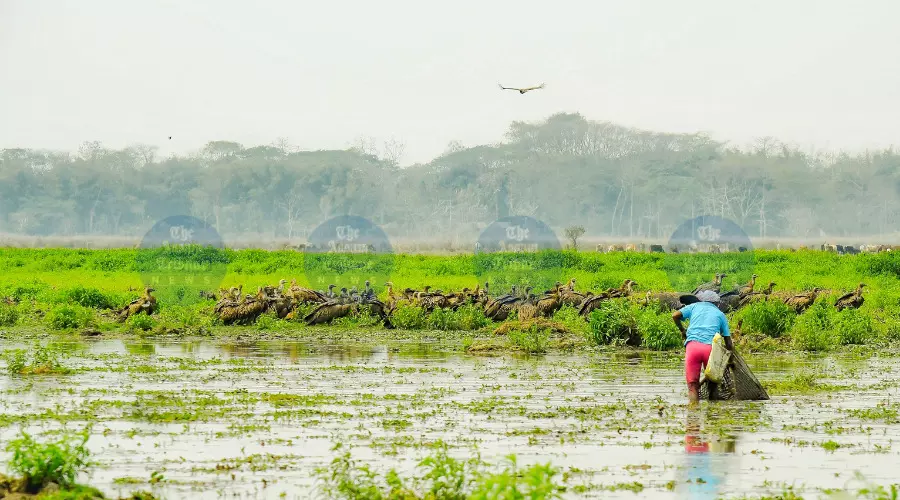
File image of Dorabeel Wetland (Photo: AT)
In yet another instance of shocking insensitivity of the State government, a life-sustaining water-body that has supported biodiversity and mass livelihood for centuries stares at the spectre of annihilation.
This is all the more deplorable because hundreds of wetlands across Assam that are undergoing rapid degradation due to growing anthropogenic activities and industrial pollution have emerged as a grave environmental concern. Located near Bijoynagar in Kamrup district, Dorabeel is much more than a wetland. Aside from supporting wide-ranging plants, mammals (including the endangered Gangetic river dolphin), birds (including four endangered species of vultures), fish, reptiles, etc., its ecosystem overlaps with grassland that sustains a village grazing ground and fertile farmland.
This makes the entire area of around 1,800 bighas (excluding agricultural land) a haven for diverse species as well as a constant livelihood provider for the local populace, who are into tilling and fishery. Also noted for its invaluable cultural worth, the wetland is rooted in local lore and has been at the centre of traditional cultural and religious practices.
All this stands threatened today with the government planning to set up an industrial park on the wetland, covering 150 bighas of pristine environment-unmindful of the havoc this unwarranted intervention will trigger on both biodiversity and livelihood.
Over 3,000 families directly dependent on livestock rearing in the grazing field will lose their livelihoods, as will those that are dependent on fishing for their sustenance. Industrial and commercial activities will put an end to the thriving pottery occupation as well.
Around 1,000 families depend on agriculture in the fertile floodplain soils, which will also be endangered. Worryingly, a few polluting industries have already come up near the area, and any further pollution in the form of an industrial park will completely destroy the wetland, besides worsening overall environmental degradation in the area, harming public health.
Also at stake are the villagers' cultural identity and existence and traditional knowledge systems - the continuity of which would be disrupted by less of land and industrial activities. The wetland's biodiversity is phenomenal with documentation of over 200 species of resident and migratory birds, 74 fish species, 26 ornamental plants, 7 edible/medicinal plants, 6 plant species used as manure, and 3 species used for making household items.
During floods, the grazing field holds the overflowing waters of Dorabeel and as such any shrinkage in the floodplain will inundate nearby villages.
Construction will also reduce groundwater recharge, leading to scarcity of drinking water and irrigation problems for local people. Given the benefits the people are getting from the wetland-not to mention its priceless worth as a biodiversity supporter - the government must have a rethink on its thoughtless plans of facilitating polluting industrial activities on the wetland.