
Six wild cat species documented in Arunachal, including rare Pallas’s cat
From Pallas’s cat to snow leopard, a WWF-India wildlife survey documented rare feline species in the state
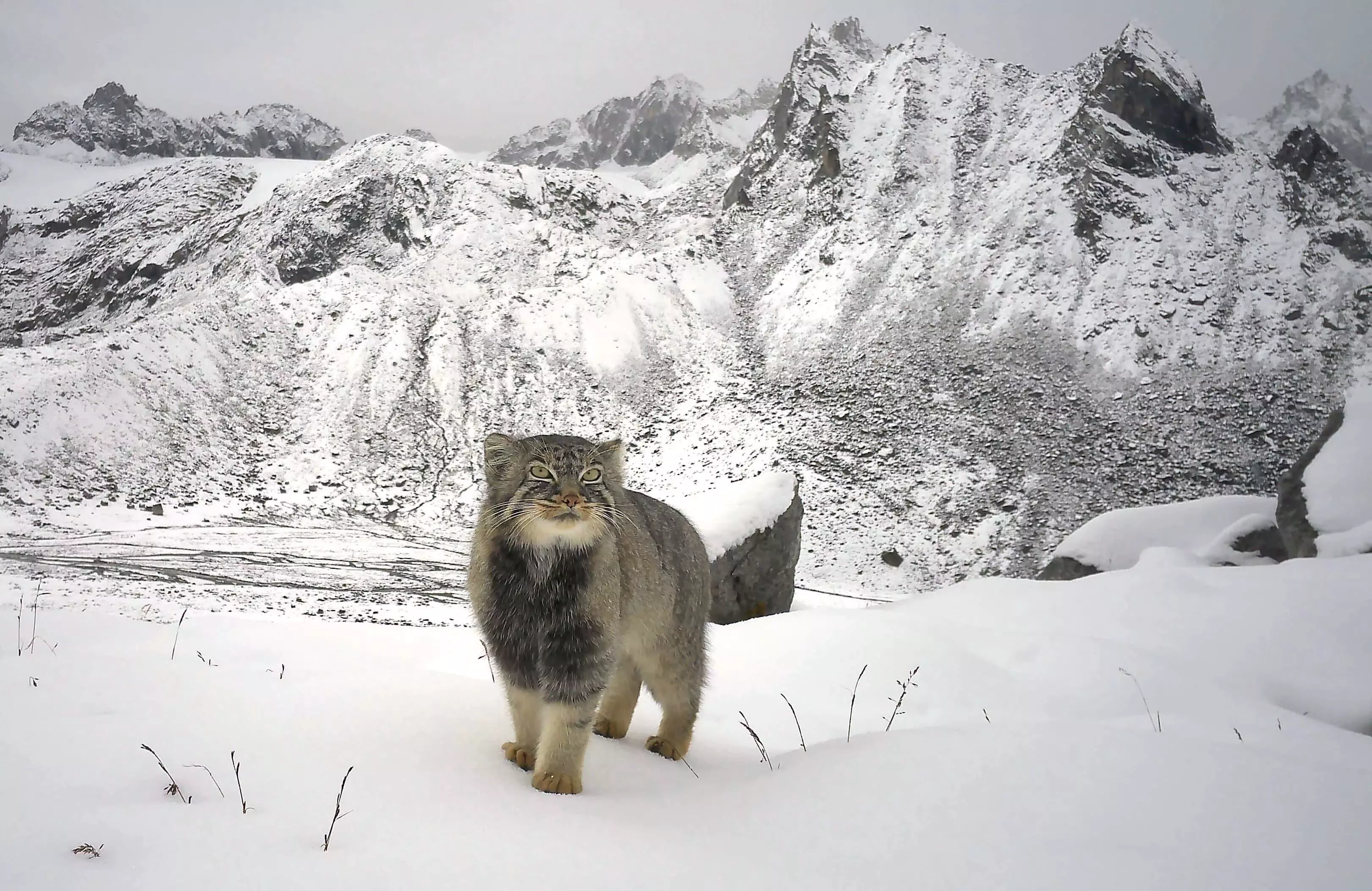
Pallas's Cat discovered in Arunachal Pradesh
Guwahati, Sept 9: A wildlife survey conducted in Arunachal Pradesh has revealed a series of rare and significant discoveries, including the first-ever photographic evidence of the elusive Pallas’s cat in the State. The survey also documented five other wild cat species – snow leopard, common leopard, clouded leopard, leopard cat, and marbled cat at 4,200 metres above sea level.
WWF-India conducted the survey in 2024, with guidance from local communities and with support from the Arunachal Pradesh Forest department, under its project “Reviving Trans-Himalayan Rangelands – A Community-led Vision for People and Nature”, which is funded by the UK government.
The WWF-India team was led by Rohan Pandit, Taku Sai, Nisam Luxom and Pemba Tsering Romo under the guidance of Rishi Kumar Sharma, head of Science and Conservation, Himalayas Programme, WWF-India.
Between July and September 2024, WWF-India deployed 136 camera traps in 83 locations across 2,000 km² of rugged high-altitude rangelands in West Kameng and Tawang districts, making it one of the most extensive wildlife monitoring exercises.
The survey involved meticulous planning and days of trekking through remote, high-altitude areas, where extreme weather, rugged and steep terrain, logistical hurdles and limited accessibility made the field work challenging. The camera traps were kept active for over eight months, often in extreme weather and remote, difficult-to-access terrain. The participation and partnership with local guides and community members enabled the team to overcome these challenges.
The survey documented the highest elevation records for several species – common leopard (Panthera pardus) at 4,600 metres above sea level (masl), the clouded leopard (Neofelis nebulosa) at 4,650 masl, marbled cat ( Pardofelis marmorata) at 4,326 masl, Himalayan wood owl (Strix nivicolum) at 4,194 masl, and grey-headed flying squirrel (Petaurista caniceps) at 4,506 masl. The elevation records documented for the common leopard, clouded leopard, marbled cat, Himalayan wood owl, and grey-headed flying squirrel were the highest in India to date and may exceed previously known global elevation limits.
The record of Pallas’s cat, while slightly lower than the absolute global maximum (5,050masl), remains highly significant. Globally listed as Least Concern on the IUCN Red List, this cold-adapted wild cat is one of the most elusive, rarely photographed and therefore remains one of the least studied feline species. Its documentation in Arunachal Pradesh significantly extended the known distribution of the species in the eastern Himalaya, adding to earlier confirmed records from Sikkim in India, Bhutan, and eastern Nepal.
Taku Sai, senior project officer, WWF-India, said, “The findings of this survey are remarkable and the discovery of multiple wild cats at such extreme elevations opens exciting new opportunities for ecological research and conservation.”
Ngilyang Tam, PCCF and CWLW (Wildlife and Biodiversity), Forest department, said, “The discovery of Pallas’s cat in Arunachal Pradesh is a milestone for wildlife research in the eastern Himalayas.”