
Mizoram completes 93% biometric enrolment of Myanmar refugees across 11 districts
Officials said an additional 231 refugees entered Champhai district towards the end of January, followed by another 137 arrivals last week.
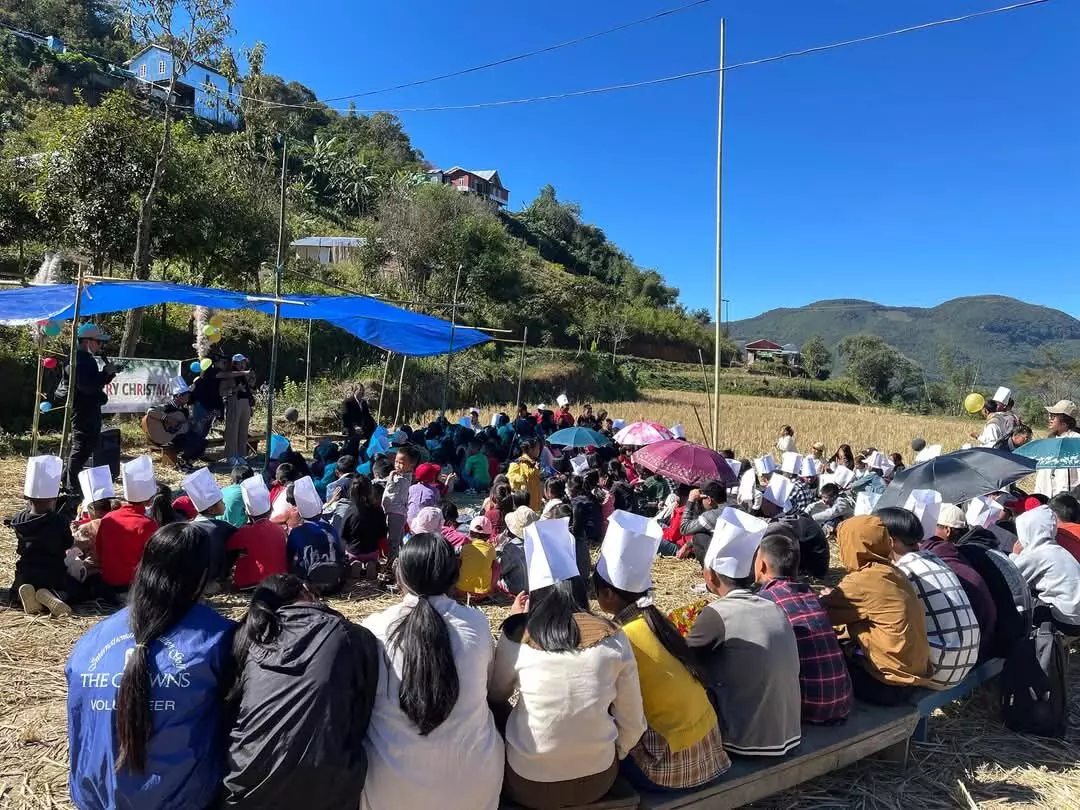
A file image of Myanmar Refugees in Mizoram. (AT Photo)
Aizawl, Feb 9: Mizoram has made significant headway in the biometric enrolment of refugees from Myanmar, with more than 90 per cent of the exercise completed across the State, officials of the State Home department said on Sunday.
According to official data, Mizoram is currently sheltering 28,355 refugees from Myanmar. Of these, biometric details of 26,381 individuals, amounting to 93.04 per cent, have already been collected by district administrations in the 11 districts of the State.
Champhai district, which shares a long and porous border with Myanmar and hosts the largest concentration of refugees, continues to lead the exercise. The district administration has completed biometric enrolment of 12,083 refugees, even as fresh inflows were reported. Officials said an additional 231 refugees entered Champhai district towards the end of January, followed by another 137 arrivals last week, yet the district has managed to keep pace with enrolment.
Several other districts have already wrapped up the process. Aizawl, Lunglei, and Serchhip districts completed biometric registration earlier, reflecting smoother administrative conditions and relatively easier access to refugee settlements. In southern Mizoram, Hnahthial district has also reported near-total coverage, with biometric data collected from 563 of the 591 refugees residing there, achieving 95.26 per cent completion as of Friday.
In contrast, progress has been noticeably slower in Lawngtlai district, Mizoram’s southernmost district, which borders both Myanmar and Bangladesh. Despite hosting 5,034 refugees from Myanmar, district officials have so far managed to enroll only 3,677 individuals, translating to 73.04 per cent coverage. Interestingly, the district has also recorded a net decrease of 983 refugees compared to figures from late January, though the reasons for the decline were not immediately clear.
Officials acknowledged that the overall pace of biometric enrolment has varied widely across districts. Although the exercise was formally launched in all 11 districts in the latter part of July last year, a range of challenges have hampered uniform progress. These include technical problems with enrolment equipment, logistical constraints, and the difficult terrain in many border areas where refugee settlements are located.
Adding to the concerns, the biometric enrolment process has reportedly come to a complete halt in five districts during January. These include Siaha district along the Myanmar border, Kolasib bordering Assam, Saitual adjoining Manipur, Mamit bordering Tripura and Bangladesh, and Khawzawl district in northeastern Mizoram. The State Home department said it was yet to receive clear information on the reasons behind the suspension of enrolment activities in these districts.
The biometric registration exercise is seen as a crucial step for the State administration to accurately document and manage the large number of refugees who have crossed into Mizoram following political instability and armed conflict in neighbouring Myanmar. Officials indicated that efforts are being made to address technical and logistical bottlenecks to ensure that the remaining enrolment is completed at the earliest.
With border movements continuing intermittently and fresh arrivals reported from time to time, the State faces the dual challenge of completing the existing enrolment while also keeping records updated to reflect new inflows.
By
Correspondent