
Forecast signals El Niño return, raise weak monsoon concerns in Northeast
Global forecasts indicate a 62% chance of El Niño in 2026, raising fears of below-normal rainfall and higher temperatures in Northeast India
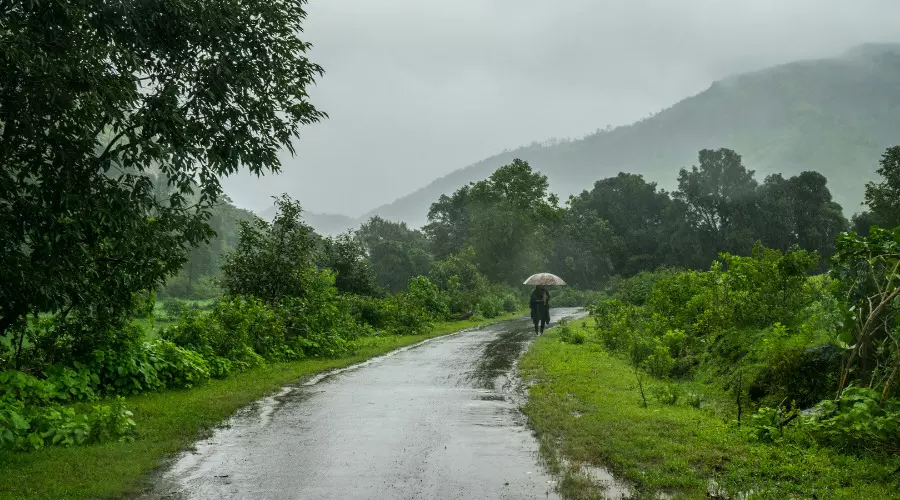
Representational Image
Guwahati, March 19: Global forecasters have predicted the possibility of an El Niño this year, and if it occurs, Northeast India could be bracing for yet another year of below-normal monsoon rainfall and high temperatures this summer.
The Northeast region has already witnessed five consecutive years of below-normal monsoon rainfall. Last year, East and Northeast India recorded their second-lowest monsoon rainfall (1089.9 mm) in the last 125 years, after 2013 (1065.7 mm).
In its latest outlook, the US NOAA Climate Prediction Centre has cautioned that in June-August 2026, El Niño is likely to emerge (62 per cent chance) and persist through at least the end of 2026.
The World Meteorological Organisation also stated that the recent weak La Niña event is expected to fade into ENSO-neutral conditions, which may swing to a warming El Niño episode later this year.
El Niño refers to the periodic large-scale warming of the ocean surface temperatures in the central and eastern equatorial Pacific Ocean, coupled with changes in the tropical atmospheric circulation, including changes in winds, pressure and rainfall patterns. It usually has the opposite effects of La Niña on weather and rainfall patterns.
In an email interaction with The Assam Tribune, Dr Akshay Deoras, Research Scientist at the National Centre for Atmospheric Science & Department of Meteorology, University of Reading, UK, stated that a strong El Niño typically reduces the southwest monsoon’s seasonal rainfall across India and tends to make the monsoon season warmer than normal.
“Some climate-model projections are already beginning to indicate this possibility. Another feature often associated with El Niño years is an increased likelihood of monsoon breaks, which can influence the overall distribution of rainfall during the season. This could be concerning for Northeast India, which has been seeing a reduction in seasonal rainfall in recent years,” Deoras said.
El Nino (meaning little boy in Spanish) is a natural climate phenomenon marked by warmer-than-average sea surface temperatures in the central and eastern Pacific Ocean near the equator, which occurs on average every 2-7 years. Depending on its strength, El Nino can cause a range of impacts, such as increasing the risk of heavy rainfall and droughts in certain locations around the world.
While there’s a notable connection between ENSO (El Niño-Southern Oscillation) events and monsoon patterns, it’s not a consistent one-to-one correspondence. Of the 18 drought years in India over the past 100 years, 13 have been associated with El Nino.
IMD says while there’s a statistically significant association between ENSO and the Southwest Monsoon rainfall, it’s not the only factor influencing monsoon rainfall over India. Other factors, such as the Indian Ocean Dipole (IOD), Eurasian snow cover, and other regional and global atmospheric patterns, can also play a role, it says.
Noting the forecasts, the State Bank of India, in a report, also cautioned that the recent forecast for global weather patterns indicates a possible buildup of El Nino in 2026. “The recent trends in Nino 3.4 SST Index show that ENSO is currently in neutral phase but may transition to positive either in 2026 or in the latter part of 2026. As the Indian monsoon is influenced by global weather patterns, this, along with the ongoing geopolitical crisis (price of fertilisers, natural gas and Brent crude all imbibing volatilities), is likely to affect inflation in 2026,” it stated.
Clearer signals are likely to emerge by the end of May.