
As rat menace spreads, 73 Mizoram farmers say no to poison, cite crop, water risks
Farming families in Lunglei resist government rodent poisoning, fearing crop and water contamination during harvest.
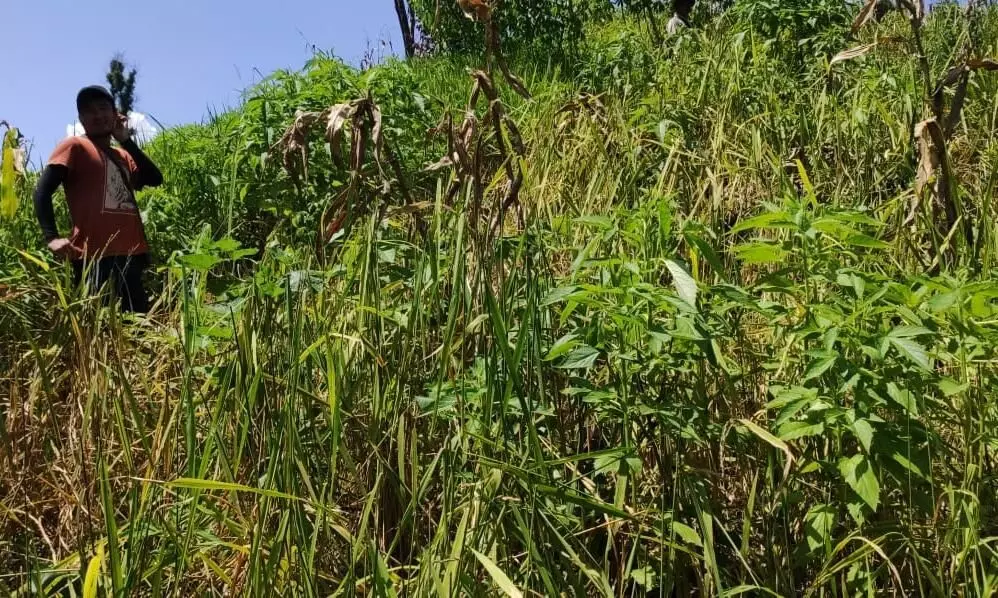
A file image of crop destroyed due to rodent outbreak in Mizoram. (Photo: @airnews_aizawl/x)
Aizawl, Oct 6: As Mizoram battles a severe rodent infestation, 73 farming families from Mamte and Thlengang villages in Lunglei district have refused to join a government-led mass poisoning campaign.
While rats have ravaged paddy fields across 130 villages in all 11 districts, these farmers are standing firm, opting for safer, traditional methods to protect their crops.
The Lunglei District Agriculture Office launched a mass rodent poisoning drive on Friday in Tawpui North-I, Mualcheng South, Thingfal, Mamte, and Thlengang - all among the worst-hit areas.
But the operation faced resistance from dozens of families who warned that rodenticides could harm their standing paddy, other crops, and nearby water streams, especially with the harvest season in full swing.
For many in Mamte and Thlengang, the timing of the poison drive felt disastrous. Farmers argued that applying toxic substances now could contaminate the grain they have struggled to save and endanger their livelihood for the entire year.
Mamte village, home to 134 households, depends heavily on traditional agriculture, with 47 families cultivating paddy and mixed crops. In Thlengang, 40 of 50 households rely on farming.
Despite the growing rodent menace, most of these families have rejected chemical measures, preferring natural or community-based solutions.
Officials from the district agriculture office visited the affected villages to assess crop loss and explain the poisoning process.
They documented extensive damage but maintained that no coercion was used and that farmers’ decisions would be respected.
The outbreak has devastated large swathes of cropland across Mizoram. The sudden explosion in rodent numbers has been linked to Thingtam, a rare ecological event caused by the gregarious flowering of the Rawthing bamboo (Bambusa tulda).
The phenomenon, which occurs roughly every 48 years, last struck in 1977 and has again triggered widespread rat breeding and crop destruction.
According to R Lalnunzira, Director of the State Agriculture & Farmers’ Welfare Department, rodents have damaged about 1,737 hectares of paddy fields out of the State’s 6,870 hectares of cropland.
Apart from paddy, crops like maize, sugarcane, cowpea, ginger, eggplant, chilli, pumpkin, sesame, and cucumber have also been hit.
Lalnunzira said many farmers have suffered near-total losses, with recovery expected to take time.
The department is exploring alternative control methods and support measures, but the long-term impact of the Thingtam-driven infestation remains a major concern for Mizoram’s farming community.