
18 days on, Kharsang gas blowout continues in Arunachal, sparking health fears
Sources in the oil industry told The Assam Tribune that a key equipment failure was behind the uncontrolled release of natural gas.
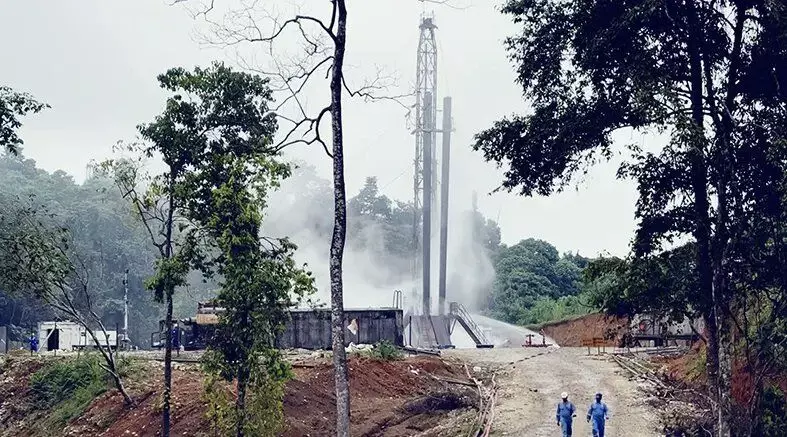
Guwahati, Nov 17: The blowout at the Kharsang oilfield (Well No. 76) in Changlang district of Arunachal Pradesh is yet to be controlled after 18 days, triggering fear over human health and environmental damage.
The incident took place in the afternoon of October 30 during a well-closing operation at the oilfield operated by GeoEnpro Petroleum Ltd (GEPL). The well was handed over to Oil India Limited (OIL) following the disaster, with crisis management teams from OIL and ONGC (Oil and Natural Gas Corporation) actively engaged in well-killing operations since.
The oil well being located in a remote area, risk to human population is not high but the prolonged blowout is bound to leave adverse impact on air and soil. Samples are being collected for assessing the damage. US-based specialists from CUDD Energy Services are to be roped in for well-killing operations.
Sources in the oil industry told The Assam Tribune that a key equipment failure was behind the uncontrolled release of natural gas. “The blowout preventer (BOP) did not close properly due to incomplete closure and gaps in the BOP. This allowed high-pressure gas to escape uncontrolled,” sources added.
“During routine well-closing operations, a functional fault developed in the blowout preventer. The malfunction led to uncontrolled release of high-pressure gas from the newly-drilled well. Because the reservoir pressure exceeded the containment capability (via the BOP and drilling fluid), the gas surged to the surface,” sources elaborated.
The latest blowout is not an isolated incident, with a similar blowout affecting Well No. 60 in 2015, which had resulted in emergency evacuations. The disaster was contained after more two weeks.
Earlier in June this year, a blowout occurred in an ONGC well in Sivasagar district, with gas leakage continuing for 16 days before being successfully capped. This incident led to the evacuation of nearby residents, but no injuries to people was reported.
Before that, the Baghjan blowout at an OIL-operated well in Tinsukia district in May 2020 was among the worst such disasters in the country. There was uncontrolled gas and oil leak, escalating into a massive inferno that raged for over five months, causing widespread environmental damage, loss of wildlife and livestock, damage to cropland, displacement of local communities, and death of three persons.
By
Staff Reporter