
Treat human–wildlife conflict as natural disaster; Rs 10L payout mandatory: SC
The court underlined that compensation must be uniform across the country & free from unnecessary delays
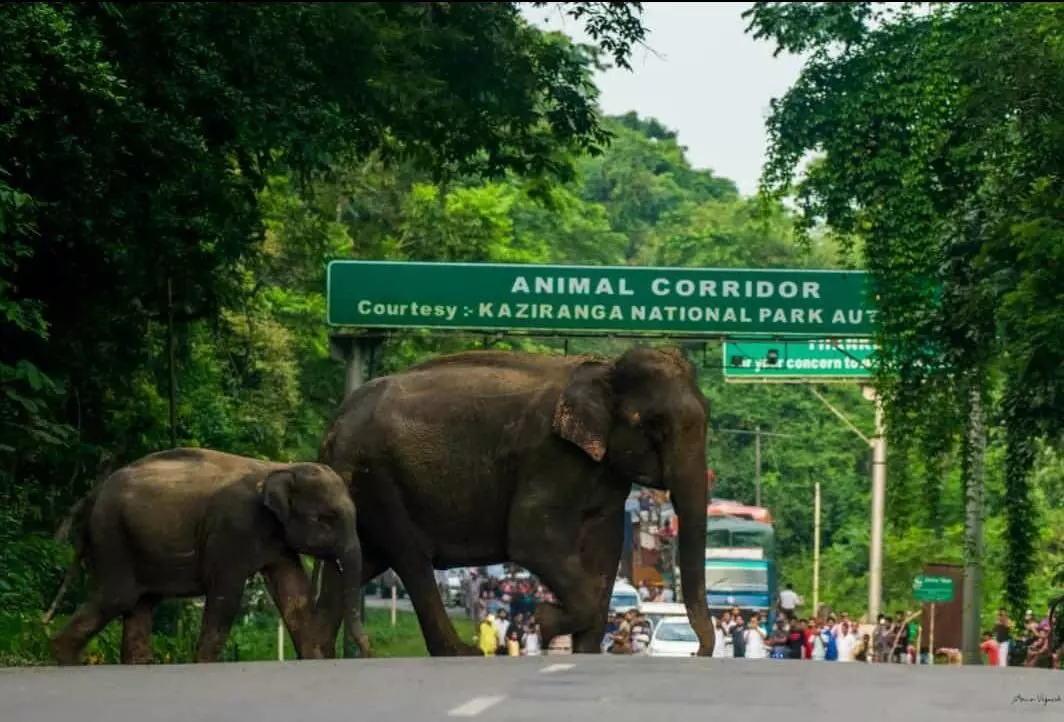
Guwahati, Nov 18: The Supreme Court has directed all states to actively consider classifying human–wildlife conflict as a “natural disaster”, saying such recognition would enable quicker relief, clearer administrative responsibility and faster access to disaster management resources.
A Bench of Chief Justice of India BR Gavai, Justice AG Masih and Justice AS Chandurkar issued the order on Monday, while hearing matters related to ecological damage in the Jim Corbett Tiger Reserve, where illegal tree felling and unauthorised constructions had raised serious concerns.
“Notifying ‘human–wildlife conflict’ as a ‘natural disaster’ should be actively considered by other states,” the Court said, adding that all states are required to provide Rs10 lakh ex-gratia compensation as fixed by the MoEF&CC.
The Court held that the payment of Rs10 lakh ex gratia for every human death caused by wildlife is mandatory, as fixed under the Integrated Development of Wildlife Habitats (CSS-IDWH) scheme of the Ministry of Environment, Forest and Climate Change (MoEF&CC).
It underlined that this compensation must be uniform across the country and free from unnecessary delays or complex local procedures.
The Bench noted that some States, including Uttar Pradesh, have already notified human–wildlife conflict as a natural disaster, and said that other States must “positively consider” adopting the same approach.
In a significant direction aimed at establishing common standards, the Court instructed the National Tiger Conservation Authority (NTCA) to prepare Model Guidelines on Human–Wildlife Conflict within six months.
NTCA has been permitted to consult state governments and the Central Empowered Committee (CEC) during the drafting process, and once issued, every state must implement the guidelines within six months.
The Court accepted the recommendations of an Expert Committee, which stressed that compensation systems must be smooth, accessible and inclusive, covering crop loss, cattle loss, human injury and death.
The Bench observed that delays in relief often erode public trust, and emphasised that timely compensation is essential to ensure community participation in conservation efforts.
The judgment also highlighted the need for stronger coordination between Forest, Revenue, Police, Disaster Management and Panchayati Raj departments.
The Court pointed out that response delays frequently result from confusion over responsibilities, and directed States to establish swift, clearly defined mechanisms for managing conflict situations.
The Bench reiterated that notifying human–wildlife conflict as a natural disaster would allow quicker disbursal of funds and ensure more efficient administrative response.
The directions aim to strengthen India’s framework for managing rising human–wildlife conflict and to ensure that affected families receive prompt and fair relief.