
Parliament clears National Sports Governance, Anti-Doping Bills in back-to-back moves
The two bills will now be sent for presidential assent before being enacted into law.
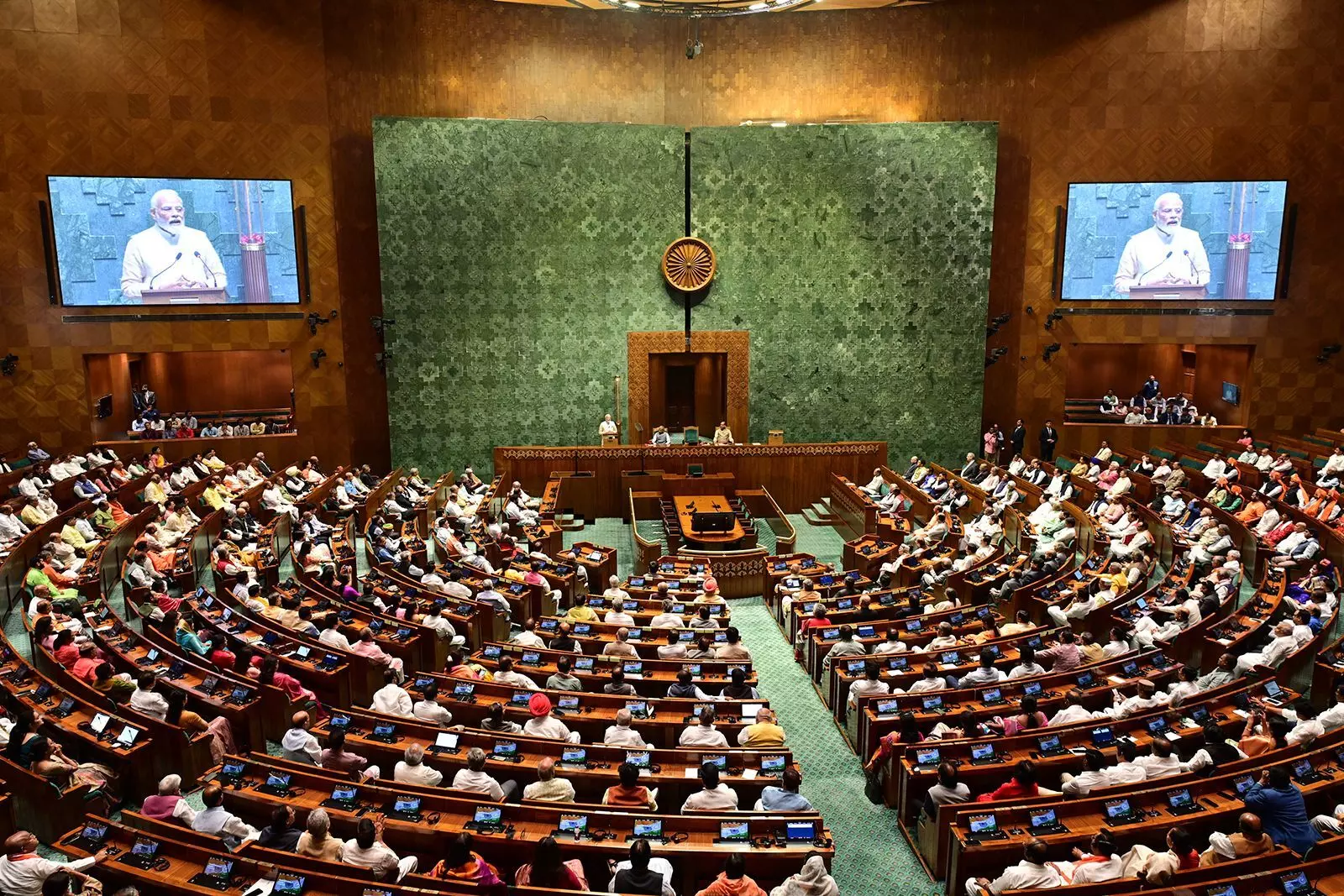
An aerial view of the the Rajya Sabha. (Photo:X)
New Delhi, Aug 12: The Parliament on Tuesday passed the National Sports Governance Bill, with the Rajya Sabha giving its approval just a day after the Lok Sabha, marking a landmark moment in the country’s sports administration. The legislation paves the way for the creation of a national sports board and an independent dispute resolution mechanism to regulate sports governance in India.
The National Anti-Doping (Amendment) Bill, aimed at strengthening the autonomy of the National Anti-Doping Agency (NADA) in line with World Anti-Doping Agency (WADA) requirements, was also cleared by both Houses. The two bills will now be sent for presidential assent before being enacted into law.
The bills were taken up in the Rajya Sabha at 3 p.m. by Minister of Youth Affairs and Sports Mansukh Mandaviya. However, proceedings were disrupted by loud protests from the opposition over the revision of electoral rolls in Bihar.
Led by Leader of Opposition and Congress President Mallikarjun Kharge, opposition members staged a walkout after demanding an immediate discussion on the Bihar issue, leaving the House to pass the bills in their absence.
“In 20 countries, there is sports law. I request the Rajya Sabha to make India the 21st country with a sports law,” Mandaviya said in his address which was followed by a discussion that lasted over two hours.
During the discussion, BJD MP Subhashish Khuntia raised concerns about the centralisation of sports governance due to the bill. He also felt that the bill did not have clarity on district and block level development of athletes.
“The bill should empower, not control,” he said.
Mandaviya responded by saying that the government is only seeking to be a facilitator.
“In this bill, we are bringing transparency, not control, not interference. Government doesn’t want to control. We are being the supporters and providers of a structure,” he asserted.
Former All India Football Federation President and NCP leader Praful Patel and Indian Olympic Association President PT Usha, who is a nominated member, were among the prominent voices who lauded the bill.
“It was a long-standing legislation that was required. We have had a sports code, it’s been a loose code and never stood any legal scrutiny. What is happening today is the need of the hour,” Patel said.
“We are hoping to win the 2036 bid of Olympics. That itself would be a redefining moment for Indian sports. This bill is absolutely in the right direction. We need this to achieve glory that is beyond cricket. It is imperative that this bill be passed with fullest support,” he added.
Usha expressed similar sentiments and said, “This bill will usher in transparency, accountability, and gender parity. It will empower athletes and build confidence among sponsors and federations. It is about justice and fair-play.”
Mandaviya has described it as “the single biggest reform in sports since independence.”
The most striking aspect of the bill is the NSB to create a stringent system of accountability. The NSB will have the mandate to de-recognise a national body that fails to hold elections for its Executive Committee or has committed “gross irregularities in the election procedures.”
Failure to publish annual audited accounts or “misused, misapplied or misappropriated public funds” would also be liable for action by the NSB but it would be required to consult the concerned global body before making its move.
Another feature is the proposal for a National Sports Tribunal, which will have the powers of a civil court and decide disputes ranging from selection to election involving federations and athletes. Once instituted, Tribunal’s decisions can only be challenged in the Supreme Court.
-PTI