
Clean energy surge could see India’s coal emissions peak before 2030: CREA report
The report highlighted that India’s rapid policy-driven expansion positions it as a key global solar manufacturing player
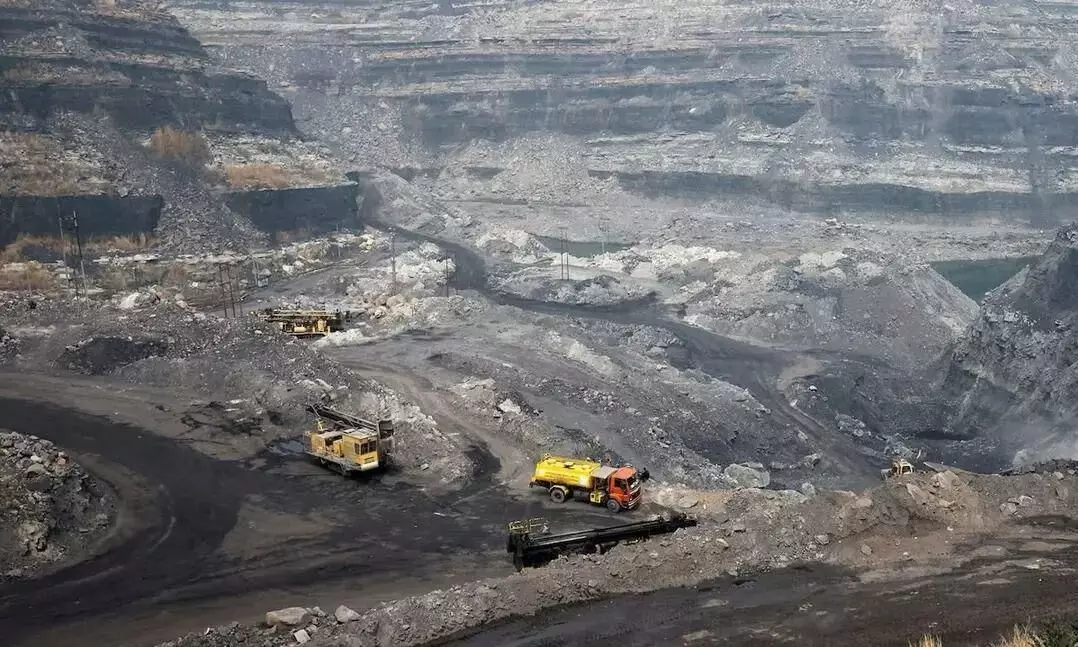
A file image of coal mine in Jharkhand (Photo: Ebo Mili/meta)
New Delhi, Oct 28: India could see its coal power emissions peak before 2030 if it meets its 500 gigawatt (GW) non-fossil power capacity target, according to a new analysis published, on Tuesday.
The report by the Centre for Research on Energy and Clean Air (CREA) said China, India and Indonesia, the three largest coal growth markets and top drivers of global CO2 emissions since the Paris Agreement, are now on track to peak power sector emissions by 2030, provided they sustain their clean energy momentum.
Together, these countries accounted for 73% of global coal consumption in 2024.
According to the study, India's clean electricity growth has accelerated sharply, with a record 29 gigawatt (GW) of non-fossil capacity added in 2024 and 25 GW more in the first half of 2025.
Meeting India's 500 GW of non-fossil power capacity set by Prime Minister (Narendra) Modi could in fact peak coal power before 2030.
The country has already crossed the 50% mark well ahead of its 2030 deadline, even as electricity demand continues to rise in line with rapid economic and population growth.
"Strengthening grid flexibility, storage and transmission will be key to sustaining this momentum and ensuring reliable, affordable electricity," said Manoj Kumar, Analyst at CREA.
India's national policy framework, driven by competitive renewable energy auctions and ambitious manufacturing targets, has transformed it into a fast-growing solar manufacturing hub, the report stated.
The country's annual solar module capacity stood at 118 GW by mid-2025 and is projected to reach 200 GW by 2028, reducing import dependence and supporting its clean energy goals.
CREA said China has already achieved a milestone by adding enough new clean electricity generation to cover all new demand growth.
"China has already added enough new clean electricity generation to cover all new demand growth and power sector coal use and emissions have been falling since 2024 as a result," added Lauri Myllyvirta, Co-founder and Lead Analyst at CREA.
In Indonesia, the report indicated that President Prabowo Subianto's 100 GW solar programme could ensure that coal power generation peaks by 2030.
"The real opportunity lies in translating this vision into a concrete delivery roadmap that positions clean energy to dominate new capacity additions," expressed Katherine Hasan, Analyst at CREA.
The report cautioned, however, that all three countries continue to expand coal-fired capacity which is a major risk to their clean energy transition.
India plans to add about 100 GW of new coal capacity by 2035, while China has 230 GW under construction.
"Unchecked coal power expansion risks creating powerful vested interests that could potentially delay the energy transition in China, India and Indonesia. Rapid reduction in power sector emissions post coal peak would not only require maintaining pre-2030 renewable energy growth rate in all three countries but also ensuring power market and grid reforms. The total reduction in power sector CO2 emissions could be equivalent to India's total 2019 CO2 emissions, compared to business-as-usual," Myllyvirta added.
The report further noted that the three countries are driven by similar motivations- improving energy security, reducing import dependence and attracting manufacturing investment.
But sustaining clean energy growth beyond 2030 will require strong policy support, modernised grids and political will to phase down coal use.
If successful, CREA stated, China, India and Indonesia would join other BRICS nations such as Brazil, South Africa, the UAE and Ethiopia in having peaked their power sector emissions.
PTI