
Centre releases over Rs 342 Cr to Assam, Tamil Nadu to strengthen rural local bodies
Assam received Rs 214.54 crore, covering all 2,192 eligible Gram Panchayats, 156 eligible Block Panchayats, and all 27 eligible Zilla Parishads.
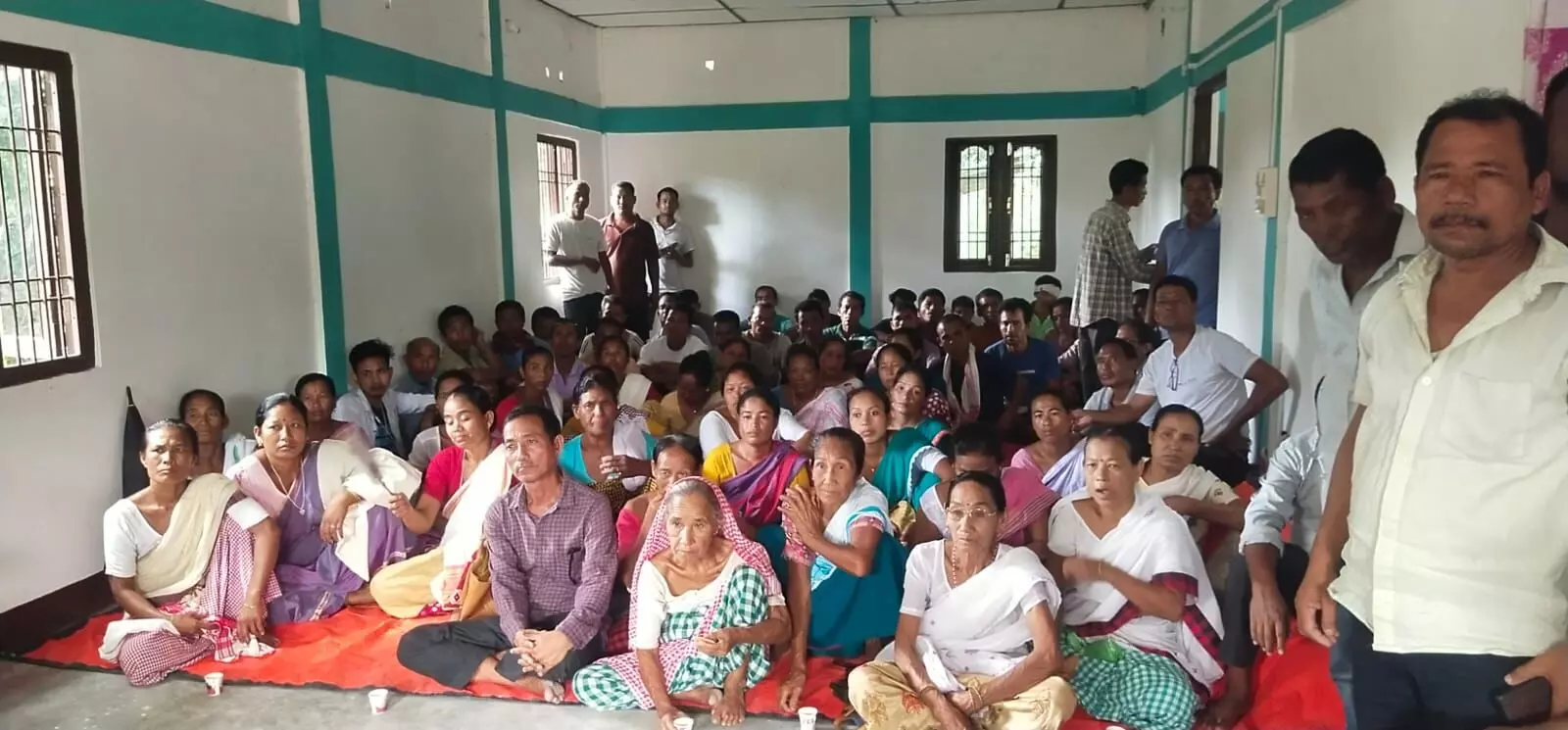
A file image of Social Audit Gram Sabha conducted at Namoni sissi Tongani Gaon Panchayat.
New Delhi, Sept 17: As part of the 15th Finance Commission’s (XV-FC) Untied Grants for the financial year 2025–26, the Centre on Wednesday released more than Rs 342 crore to strengthen rural local bodies in Assam and Tamil Nadu.
According to the Ministry of Panchayati Raj, Assam received Rs 214.54 crore, covering all 2,192 eligible Gram Panchayats, 156 eligible Block Panchayats, and all 27 eligible Zilla Parishads.
While, Tamil Nadu was allocated Rs 127.59 crore for 2,901 eligible Gram Panchayats, 74 eligible Block Panchayats, and 9 eligible District Panchayats.
The XV-FC grants are recommended by the Ministry of Panchayati Raj and the Ministry of Jal Shakti (Department of Drinking Water and Sanitation) and released by the Ministry of Finance in two instalments each financial year.
Last month, the Centre released over Rs 284 crore under the same scheme to rural local bodies in Mizoram, Odisha, and Tripura.
Mizoram received Rs 14.28 crore for 827 eligible Village Councils as part of the 2023–24 grants.
Odisha was allocated Rs 240.81 crore for 6,085 eligible Gram Panchayats and 63 Block Panchayats.
Tripura received Rs 29.75 crore for 606 Gram Panchayats, 35 Block Panchayats, 8 Zilla Parishads, along with all 587 Village Committees and 40 Block Advisory Committees.
The Untied Grants will be utilised for location-specific felt needs, except for salaries and other establishment costs.
The Tied Grants can be used for the basic services of sanitation and maintenance of ODF status, and this should include management and treatment of household waste, and human excreta and fecal sludge management in particular and supply of drinking water, rainwater harvesting and water recycling.
With inputs from IANS