
Tensions flare as Afghanistan reports multiple blasts, suspects Pak cross-border strike
Kabul residents reported aircraft sounds before a series of explosions as suspicion of Pakistani involvement grows amid strained ties
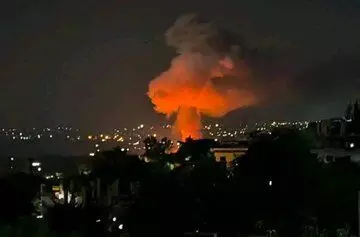
Explosion in Afghanistan after suspected cross-border strike (Photo: @GulshanKum6415/x)
Kabul, Oct 10: Tensions between Pakistan and Afghanistan escalated sharply after multiple explosions sounded in Kabul, with residents and observers suspecting cross-border airstrikes.
Powerful blasts echoed through the Afghan capital and several neighbourhoods, with witnesses reporting the distinct sounds of aircraft overhead.
Reportedly, explosions originated in District 8 in eastern Kabul, an area housing key government officials and residential blocks, triggering widespread panic.
While the exact source and intent behind the blasts are still unconfirmed, early reports point to the possibility of airstrikes, raising concerns over the escalation of regional conflict.
The incident came hours after Pakistan’s Defence Minister Khawaja Asif made a fiery statement in the National Assembly, hinting at a collapse of diplomatic restraint.
“Enough is enough, our patience has run out. Terrorism from Afghan soil is intolerable,” Asif said, recalling a past visit to Kabul by Pakistani officials, during which Afghan authorities allegedly refused to offer assurances against militant activity targeting Pakistan.
Although Pakistan has not officially confirmed launching any strikes, the timing of Asif’s remarks and the subsequent explosions in Kabul have fuelled speculation of possible military involvement.
In the wake of rising tensions, mobile internet services were abruptly suspended in the Pakistani cities of Islamabad and Rawalpindi with no official explanation from authorities.
The alleged strikes were condemned by Baloch representative Mir Yar Baloch, who took to X, issuing a strong rebuke of Pakistan’s actions.
“We strongly condemn the terror attack on Kabul today by the rogue state of Pakistan. The terrorism carried out by the rogue state of Pakistan and its diseased/rogue military, which is involved in the attack on Kabul, could be ended within weeks if Afghanistan recognises Balochistan as a free (independent) state.”
He further argued that Pakistan’s military garrisons and airbases, which are located in Balochistan and occupied Pashtunistan, do not represent the nation as a whole but rather function as instruments of coercion against neighbouring regions.
“Pakistan has no direct border with Afghanistan; the military garrisons and airbases of what is, in effect, Punjab-based Pakistan are located in Balochistan and occupied Pashtunistan, and they are a symbol of terrorism for Balochistan and Pashtunistan as well as a threat to Afghanistan’s security,” he added.
Proposing a bold geopolitical shift as a solution, Baloch stated “If today Kabul recognises Balochistan as an independent state and incorporates Pashtunistan into Afghanistan, accepting it as part of its territory, then the Baloch and Afghan peoples together could secure their border and airspace. This would not allow Pakistan’s military aircraft and drone strikes to enter their air space and target innocent civilians, and Pakistan would not be able to challenge our national security.”
As tensions continue to rise, fears are mounting of a broader regional military escalation.
IANS