
Israel strikes Tehran with reported US support; tensions soar over Iran nuclear standoff
Israel launched the daylight attack targeting military and intelligence sites near Ayatollah Khamenei’s office amid tensions over Iran’s nuclear programme.
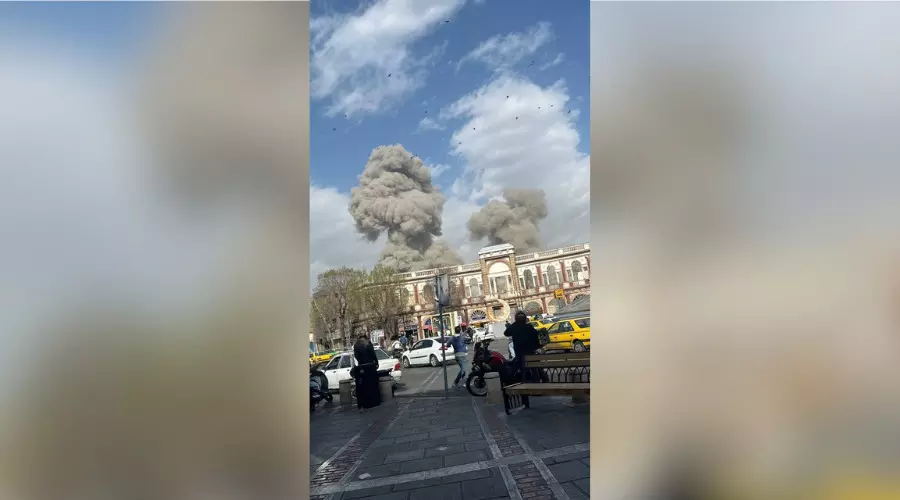
An image of the strike (Photo - @Vahid / X)
Guwahati, Feb 28: In a major escalation in West Asia, Israel on Saturday carried out a daylight attack on Iran’s capital Tehran, with reports suggesting the United States also participated in the strikes, significantly heightening tensions over Iran’s nuclear programme.
Witnesses reported seeing a large cloud of smoke rising from downtown Tehran following the first apparent strike, which took place near the offices of Iran’s Supreme Leader, Ayatollah Ali Khamenei. Authorities quickly shut down roads leading to his compound, while multiple explosions were heard across the capital.
According to a US official and another person familiar with the operation, Washington was involved in the strikes, although the full extent of American participation remains unclear. The White House did not immediately comment on the development.
It was also not known whether the 86-year-old Khamenei was present at his office during the attack. He has not been seen in public in recent days as tensions between Iran, the United States, and Israel have intensified.
Sources briefed on the operation said Israel targeted Iranian military infrastructure, intelligence facilities, and symbolic government sites as part of a broader campaign aimed at neutralising perceived threats. Israeli Defence Minister Israel Katz described the action as necessary “to remove threats,” but did not elaborate further.
The strikes came amid mounting pressure on Iran over its nuclear programme. The United States has reportedly deployed a significant number of fighter jets and naval assets across the region in recent weeks to push Tehran towards a deal restricting its nuclear activities.
Iran has maintained that its uranium enrichment programme is peaceful and within its rights, while resisting international pressure to curb its missile programme and regional influence, including its support for groups such as Hamas and Hezbollah.
The situation raised fears of a wider regional conflict, as Iran has previously warned that any attack would lead to retaliation against US personnel and bases across West Asia. However, there was no immediate confirmation of retaliatory action.
In Israel, authorities activated emergency protocols. Several hospitals shifted critical services and surgeries to underground facilities, while sirens sounded nationwide. The Israeli military also closed the country’s airspace and issued alerts warning of possible missile attacks.
Meanwhile, Iranian state television confirmed the explosions in Tehran but did not provide details on the cause or casualties. Iran also shut down its airspace, while reports indicated disruptions in mobile communication services.
As both sides remain on high alert, the international community is closely monitoring the developments, fearing that the situation could spiral into a broader conflict with far-reaching geopolitical consequences.
With inputs from news agencies