
Gauhati HC acquits death row convict in 2018 train passenger murder case
Senior counsel appointed as amicus curiae for the respondent, argued that except for the alleged disclosure statement & extrajudicial confession, there was no evidence linking Das to the crime.
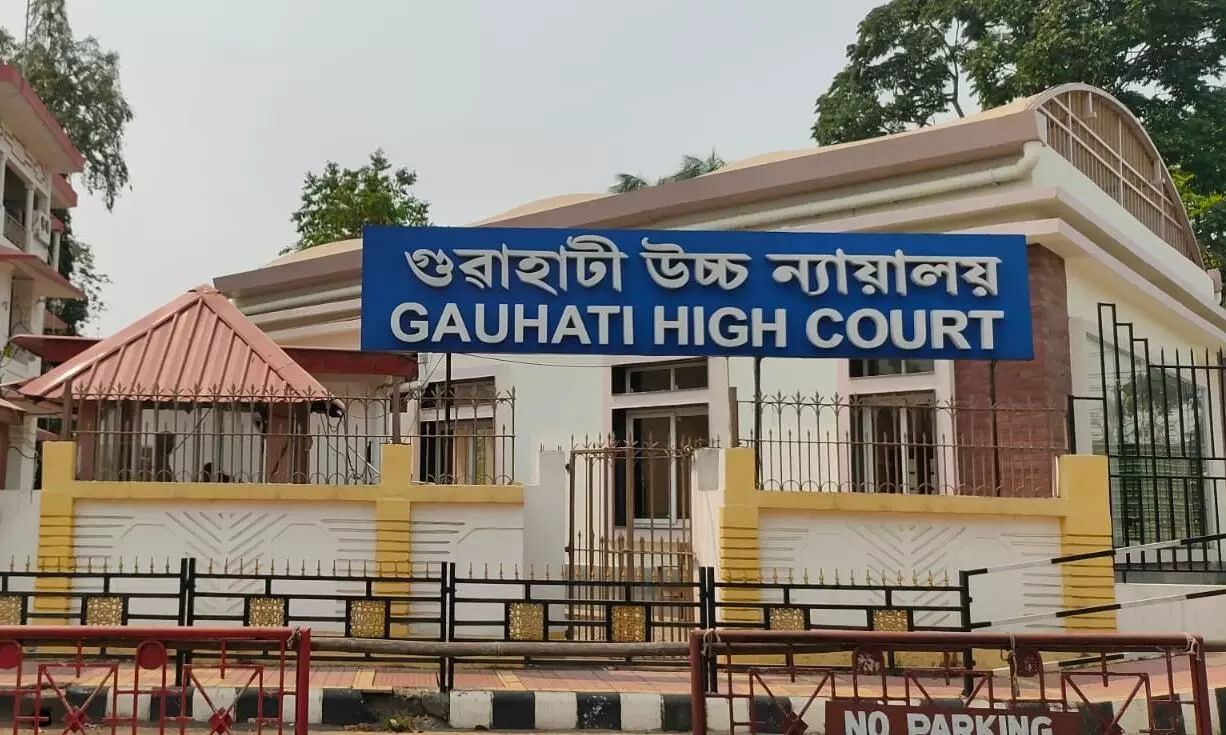
A file image of Gauhati High Court (AT Photo)
Guwahati, Sept 20: In a rare judicial order, the Gauhati High Court on Friday acquitted Bikash Das, who had been sentenced to death by a lower court for the alleged serial killing of female train passengers.
The case dates back to July 2018, when a female student from Assam Agricultural University was found dead in the toilet of the DSLR compartment of the Dibrugarh-Rangia Express at Simaluguri Railway Station. Her body was discovered in a half-naked condition, prompting railway authorities to launch an immediate investigation. A formal FIR was registered under Sections 302 and 376 of the IPC.
During the investigation, Das and another accused were charge-sheeted. The trial court convicted Das in 2019, sentencing him to death, while the co-accused was acquitted.
Senior counsel Angshuman Bora, appointed as amicus curiae for the respondent, argued that except for the alleged disclosure statement and extrajudicial confession, there was no evidence linking Das to the crime. He contended that even the disclosure statement leading to the alleged discovery of weapons was inadmissible, since no formal disclosure statement from the accused was recorded.
Bora further argued that the conviction rested on an extrajudicial confession but such confessional statements were made while in police custody and were, therefore, inadmissible under Sections 25 and 26 of the Indian Evidence Act. He added that the circumstances relied on by the trial court did not even raise a suspicion or hypothesis of guilt, as no chain of evidence existed that pointed conclusively to the accused.
After hearing both sides, the High Court observed, “…we are of the unhesitant view that the circumstances do not form a complete chain, which lead to an irresistible conclusion of the guilt of the accused. Instead, it is a case of no legal evidence against the accused. Thus, none of the pieces of evidence relied on as incriminating by the Trial Court can be treated as incriminating pieces of circumstantial evidence against the accused. An accused can be convicted on legal evidence, and if only a chain of circumstantial evidence has been so forged as to rule out the possibility of any other reasonable hypothesis, except the guilt of the accused. It is by now well settled that between ‘may be true’ and ‘must be true’, there is a long distance to travel, which must be covered by clear, cogent and unimpeachable evidence by the prosecution before an accused is condemned as a convict, which, in this case, is totally absent.”
Citing the absence of clear, cogent, and unimpeachable evidence, the High Court set aside the conviction and death sentence, acquitting Bikash Das of all charges.
By
Staff Reporter