
A month without Zubeen Garg: The people’s artiste who lived among his own
A month after Zubeen Garg’s passing, small shop owners and roadside vendors who knew him as family recall their fond memories with the 'people's artiste'
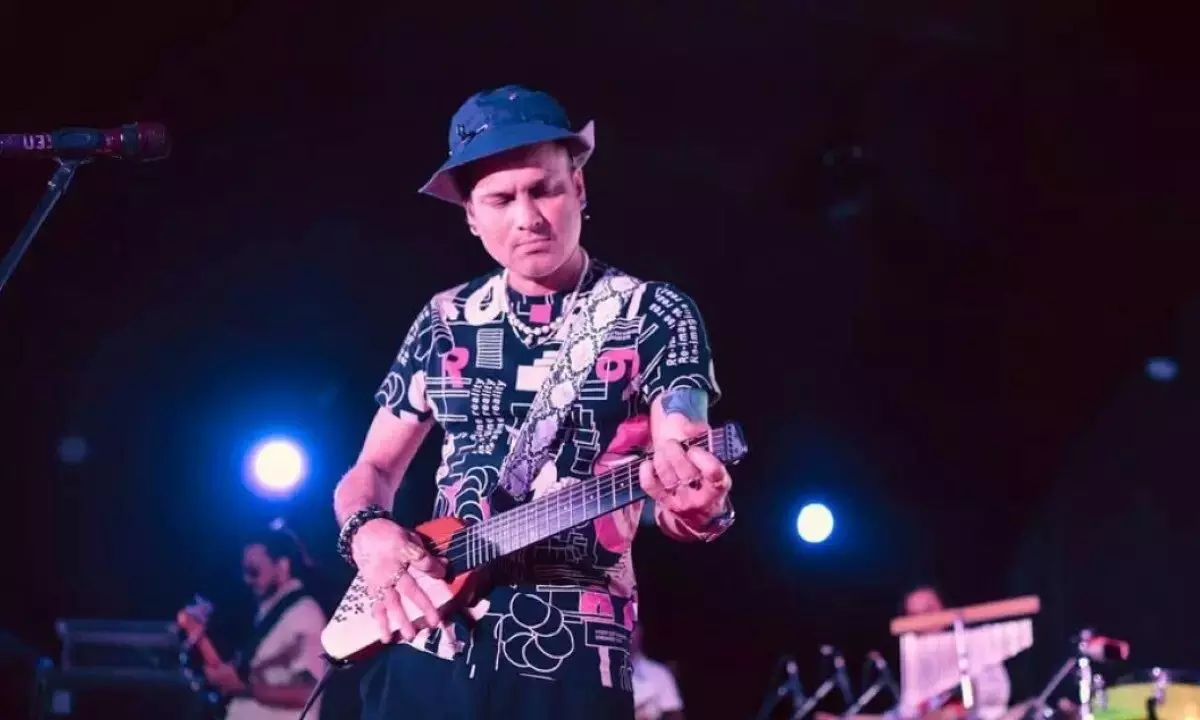
File image of Assam's late cultural icon Zubeen Garg (Photo: @parasarudayan/x)
Guwahati, Oct 19: It has been a month since Zubeen Garg, Assam’s beloved artiste and cultural icon, bid adieu to this world. But for millions in Assam, his presence still lingers in the lanes he walked, the small shops where he sat and the hearts he touched with kindness that went beyond fame.
For Manoj Das, a small shop owner from Kahilipara, Zubeen wasn’t just a customer but was family. Standing beside the counter where Zubeen once sat almost every morning, Das recalls softly, “He used to call me Deka. He said it with affection like an elder brother talking to his younger one.”
Garg would often drop by, sometimes alone, sometimes with a few friends, to eat the home-cooked food made by Das’s mother.
The tea stall in Kahilipara (AT Image)
“My mother used to cook for him. He loved her food and the simple things like rice, dal, omelet, or fish curry. He always said our food reminded him of home. He never cared for big restaurants. He said the food of the people was what kept him grounded,” Das said.
The bond went beyond meals. “When our shop needed repairs, he helped. When we lacked materials, he gave money to buy them. He told me once, ‘Deka, this shop is ours, keep it running.’ He was never distant, never proud. He sat here, laughed with us, shared stories. We didn’t see a star, we only saw a good man,” Das recalls.
His wife joins in, her voice breaking as she speaks of the void left behind.
Manoj Das and his wife outside their stall in Kahilipara (AT Image)
“Zubeen da was our God. He cared for our daughters as if they were his own. Every morning he would come, sit here for hours, sometimes feeding stray dogs, sometimes helping a passerby. Now, even mornings feel empty. We only wish for justice. Maybe then only, our hearts will rest," she says.
Across Guwahati, the sentiment is the same. At a modest Kachari Hotel near GMCH, run by Tultul Saikia - whom Zubeen fondly nicknamed “Kachari” in 2011 - memories linger.
“He came one night and asked my name. Then he said, ‘From today, I’ll call you Kachari.’ That’s how our little hotel got its name,” Saikia recalls with a smile.
“He would come after his shows or recordings, cook his own food, feed everyone and leave money for all. One night 11 people ate here, he gave Rs 5,000, and I bought a TV with that. That TV is his memory now," says Saikia.
Kachari Hotel near GMCH (AT Image)
Garg’s generosity was not limited to familiar faces. Those who gathered around him at the GMCH gate say he often stopped to talk to patients and their families, quietly helping those in need.
“He never came empty-handed. He gave money, food, whatever he could. He made people smile,” says one local vendor.
For the city’s small shopkeepers, tea sellers and street-side cooks, Garg was not just an artiste. He was one of them, eating at their stalls, sharing laughter and living a life rooted in the simplicity that fame could never take away.
As earthen lamps burn quietly today in his memory, their only wish remains - justice and the hope that the warmth of Garg’s heart will continue to light up the lives he touched.
“He is not gone. He still comes every morning, just not the way he used to,” says Manoj Das softly.