
From Hornbill to Ziro, NE’s festival calendar promises colour, culture & camaraderie
The traditional festivals of the Northeast are even more fascinating, typically attracting locals who treat them as they would any tribal celebration.
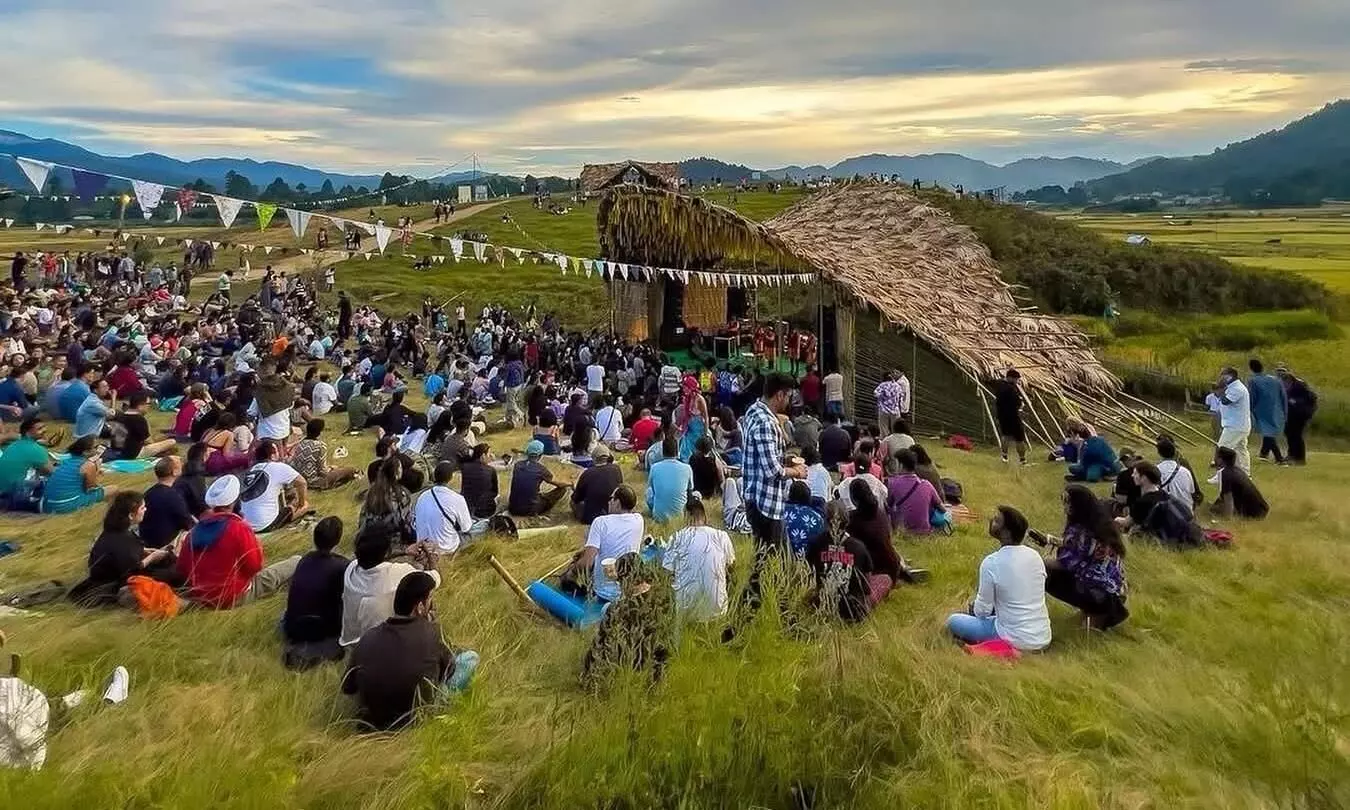
Ziro Music Festival. (Photo: 'X'/ @SheringPhurpa)
Northeast India is a region steeped in culture, tradition, colour, and diversity-truly a land of festivals. These celebrations are varied in nature and form. The more popular and touristy ones, such as the Hornbill Festival in Nagaland, Ziro Festival of Music in Arunachal Pradesh, and Cherry Blossom Festival in Shillong, are large-scale events designed to attract visitors from far and wide. They showcase local talent while featuring celebrity performances, as each state strives to outdo the other.
Then there are festivals that combine revelry with adventure, like the Orange Festival of Adventure and Music, Siang River Festival, and Menchuka Adventure Festival. Yet, for me, even at these adventure festivals, the real thrill lies in the food stalls а melting pot of tribes, cultures, and cuisines from across the region.
Where the locals gather
The traditional festivals of the Northeast are even more fascinating, typically attracting locals who treat them as they would any tribal celebration- a time to dress up in traditional attire, eat, drink, socialise, and make merry. Food is prepared to local tastes, and so are the rice beer and rice wine-a ritual for every tribe, household, and occasion.
Conversations flow easily; there is no concept. of "strangers" in villages and small towns. The local brew helps, of course. For the solo traveller, these festivals are a dream- immersive, authentic, and delightfully local, untouched by tourist crowds.
A calendar of celebrations
The Nyishis celebrate Nyokum, their pre-harvest festival. The Monpas and Membas observe Losar, their New Year celebration that lasts nearly fifteen days, with the main festivities spanning five to six days. Marked by prayers, the hoisting of religious flags, reading of Buddhist scriptures, lighting butter lamps, and endless rounds of Ara, it's a joyous time for all. The Idu Mishmis hold Reh, a festival dedicated to the gods of earth and water, known for its captivating priest dance. The Apatanis perform the Murung rituals in January, Myoko in March, and hold the Dree Festival in July. The Adi and Galo tribes of the Siang Valley celebrate Solung and Mo- pin, while Mizoram comes alive with its many Kut festivities.
Preserving paradise It's ironic. We urban dwellers dream of these farflung places, travelling halfway across the world to escape into their stillness to gaze at unpolluted night skies, free of phones, noise, and traffic.
For many of us, these dwindling pockets of wilderness are earthly paradises, fragments of a disappearing world. Yet for the people who live here, this wilderness is sustenance tilled, planted, fished, and hunted.
Their wealth lies in their culture and customs, which the people of the Northeast hold close to their hearts. Around the world, communities are losing their identities to development and urbanisation. Yet, despite limited infrastructure, the region remains one of the most visually striking and culturally rooted places I have ever seen. I can only hope its traditions endure for generations to come. Season of joy
The festival season is here again, with November and December witnessing a burst of colour and celebration across the Northeast. I've compiled a list of some of my personal favourites based on past experiences. Many feature celebrated artists alongside local performers. So go ahead- plan your holidays and experience the magic of the Northeast, the 'Land of Festivals.'
By
Ashish Raisinghani