
Spring spirit comes alive as Mising community marks Ali Ai Ligang in West Jorhat
Bahaphala hosts two-day celebration with rituals, cultural performances & community participation
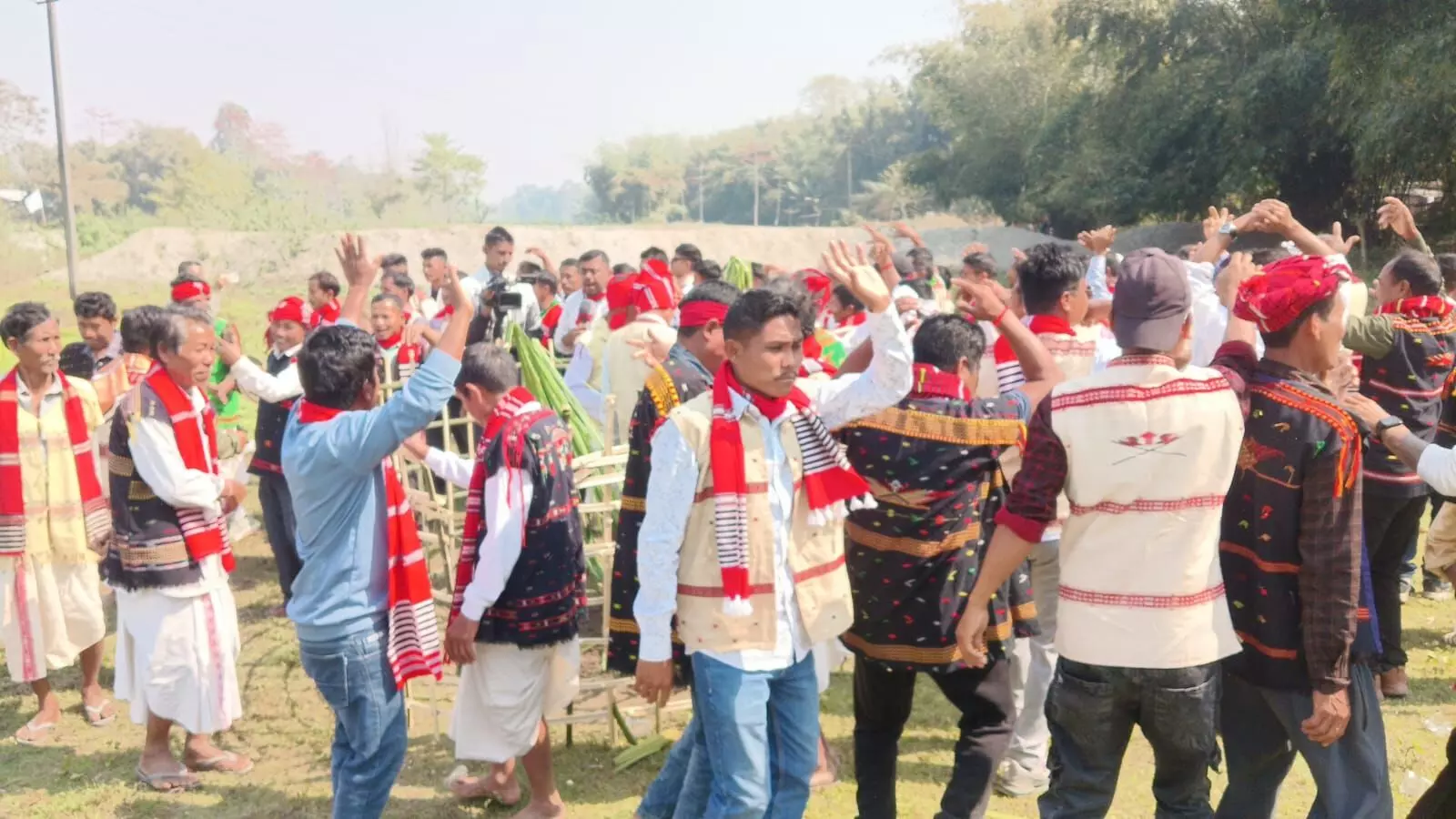
A glimpse of people rejoicing at the Ali Ai Ligang festival
Jorhat, Feb 18: The spirit of spring came alive in West Jorhat as the Mising community celebrated Ali Ai Ligang with traditional fervour and cultural enthusiasm on the first Wednesday of Phagun.
The festival is being observed in Bahaphala with a two-day programme featuring rituals, cultural performances and community participation.
From early morning the Mising settlement areas witnessed a festive atmosphere as the rhythmic beats of traditional drums and melodious folk songs echoed across the villages.
Youths, elders and children gathered in colourful traditional attire, highlighting the rich cultural identity of the community.
Participating in the celebrations, a member of the Mising community said that Ali Ai Ligang has been observed since time immemorial and holds a special place in their social and cultural life.
“Just as Bohag Bihu is regarded as the main festival in Assamese society, Ali Ai Ligang is the most important festival for the Mising people. It symbolises our bond with agriculture, nature and community,” he said.
He added that the festival begins every year on the first Wednesday of Phagun, as the day is considered sacred.
“The Mising community has traditionally depended on agriculture for livelihood. Therefore, this festival marks the beginning of the sowing season. It is also a time to pray for prosperity, good harvest and the well-being of all,” he said.
This year, the celebrations in the greater Bahaphala area are being organised with the initiative of the Bahaphala Unnayan Samiti and the local youth club.
The first day began with prayers to the Sun and the Moon, considered the principal deities of the community.
“We begin the festival by paying obeisance to the Sun and the Moon, praying for a bountiful harvest and protection of our crops from natural calamities and pests,” another participant said.
After the rituals, the community gathered at the traditional Murong house (traditional community hall) to perform traditional ceremonies.
The festival also witnessed the vibrant Gumrag dance, performed by young women of the village. The women came together in traditional attire, dancing in groups and spreading joy throughout the neighbourhood.
Explaining the significance of the festival, a community elder said, “Ali Ai Ligang represents the cycle of life and agriculture. ‘Ali’ means seeds sown underground, ‘Ai’ refers to fruits or seeds attached to plants and trees, and ‘Ligang’ means sowing. Through this festival, we honour our ancestors, seek blessings for the coming season and strengthen community bonds.”
He further said that the festival is now celebrated not only in Assam but also by the Mising diaspora across the country and abroad.
“It is a moment of identity and pride. Along with rituals, we organise cultural events to promote our traditions among the younger generation,” he added.