
Karbi Anglong violence due to government negligence: LoP Debabrata Saikia
'The character and spirit of the Sixth Schedule areas must be protected—that is our demand,' says Saikia.
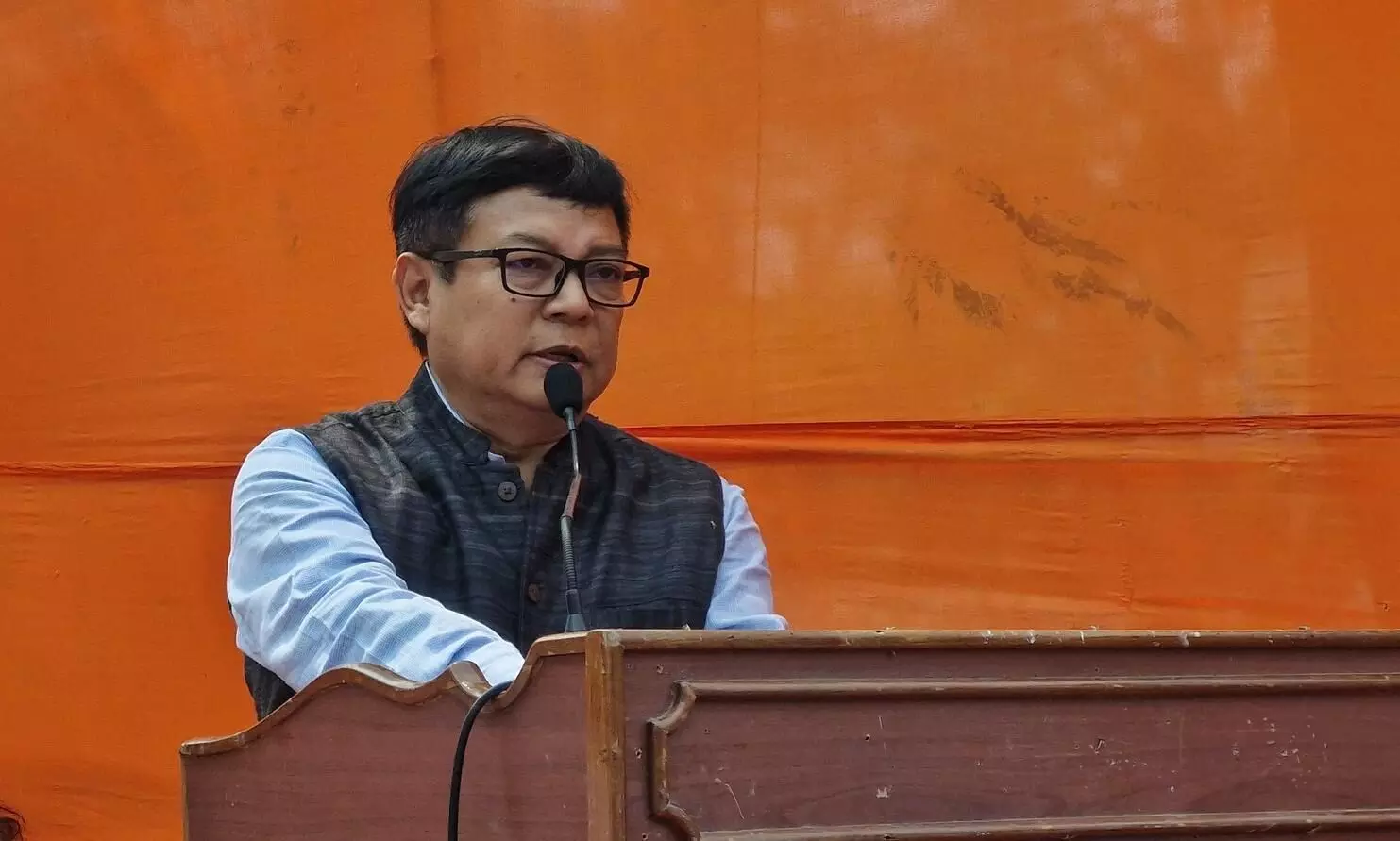
Guwahati, Dec 26: Congress Leader of the Opposition Debabrata Saikia on Friday alleged that Chief Minister Himanta Biswa Sarma, Karbi Anglong Autonomous Council (KAAC) Chief Executive Member Tuliram Ronghang and the state government’s negligence were responsible for the recent unrest in Karbi Anglong.
Addressing a press conference in Guwahati, Saikia said the violence was not a sudden development but the outcome of administrative failure and political manoeuvring.
“The incident in Karbi Anglong did not happen overnight. It occurred due to the government’s negligence. Two people lost their lives for political gain. We strongly condemn the incident. The character and spirit of the Sixth Schedule areas must be protected—that is our demand,” Saikia said.
Referring to the Chief Minister’s claim that the government’s hands were tied on evictions from Professional Grazing Reserve (PGR) and Village Grazing Reserve (VGR) lands due to court directions, Saikia countered that contempt of court cases have already been filed against the government in both the Gauhati High Court and the Supreme Court.
He also cited the Kachutoli eviction drive, where contempt proceedings were initiated against the state government for allegedly violating court orders.
“The government has repeatedly indulged in contempt of court. When court or Supreme Court orders are not followed, contempt petitions are filed. In such cases, the state government is required to explain why the orders were ignored,” he alleged.
Saikia further claimed that even in Sixth Schedule areas, the government has violated court directives by allotting land to corporate entities such as Adani and Ambani.
“This clearly shows that when it suits its political interests, the government does not hesitate to defy the courts,” he said.
Meanwhile, Assam government will organise a tripartite meeting today comprising the state government, KAAC and representatives of the protesting locals.