
Kamrup potters oppose move to de-reserve village grazing land for logistic park
The grazing reserve encompassing 150 bighas of land adjoins the Dora Beel wetland and is the main source of clay for the potters.
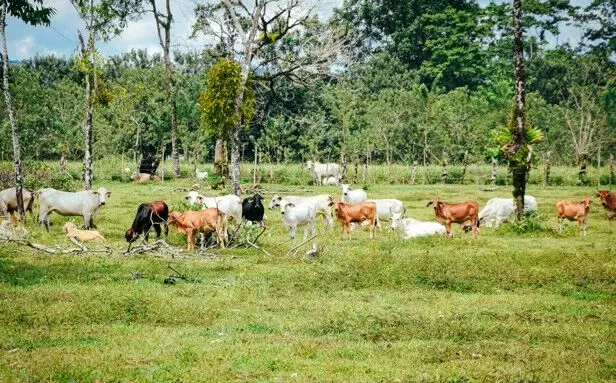
The local potters collect clay from this grazing reserve, which is essential to preserve their livelihood. (Representational Image/Photo:Unsplash)
Amingaon, Oct 30: Opposing the State government’s decision to de-reserve a village grazing reserve (VGR) of No. 2 Rampur village, the potter community (kumar) residing in Rajapukhuri, Nahira, Gargara, Bartari and other villages of the Kamrup district have demanded the preservation of the VGR.
It has been reported that the administration plans to set up a logistic park in the VGR. The grazing reserve encompassing 150 bighas of land adjoins the Dora Beel wetland and is the main source of clay for the potters. The local potters collect clay from this grazing reserve, which is essential to preserve their livelihood and the traditional craft.
Taking cognizance of the matter, Dakhin Kamrup Kumar Sanmilan Mahila Parishad, in a letter submitted to the district commissioner of Kamrup on September 25 vehemently opposed the government’s decision to convert the village grazing land to set up a logistic park. Staring at a dark future sans the reserve, they said besides livelihood, the future of their children will also be at stake.
“The clay pots that we make manually are used in various auspicious occasion. We supply them to various parts of the State, including the Kamakhaya temple and other shrines,” said Jaymati Kumari, president of the Mahila Parishad. She also added that individuals and traders throng their villages to buy the clay items in bulk.
Earlier, in a letter submitted by the Dakshin Kamrup Kumar Sanmilan to the district commissioner, in April 2025, they said that the grazing reserve is the only means of their existence. Considering the seminal role it plays in their life, authorities should take steps for its preservation. They appealed to the government to secure the source of clay needed for their breadwinning craft.
Demanding preservation of the grazing reserve, Jogendra Kumar and a group of artisans reiterated that potters from many villages solely depend on the clay collected from the grazing reserve. Once it is converted to a logistic park or something else, they will lose their livelihood.
It may be mentioned here that the construction work of a ‘common facility centre for pottery artisans’ to give a much-needed boost to the craft was completed at Rajapukhuri village in 2024. However, the facility is yet to be functional.
“The centre was completed in 2024 but is yet to be operational as the machines required have not been installed so far. We are waiting for the installation the equipment,” said Jaymati Kumari. Linking the future of the centre with the VGR, a group of potters remarked, “The centre will be of no use in the absence of the grazing reserve wherefrom we collect the raw material.” They also said that the centre will help the artisans achieve higher output in comparison to manual production process.
Aswini Kumar Mazumdar, president of the Dakhin Kamrup Janasartha Surakha Somitee said that besides ecological importance, the VGR in question is a flood reservoir. Known for his proactive approach for environmental issues, Mazumdar, commented, “It should remain as it is because the fisher folk, the livestock rearers and the potters will lose their means of livelihood once the proposed logistic park comes up.”
Deepak Kumar of Gargara, a talented clay artisan who collects clay from the grazing reserve, said that the reserve is feeding thousands of people who are keeping a craft alive against all odds.
“Our craft has survived the onslaught of plastic which has made many other crafts obsolete. It must be preserved to keep the fire of our kitchen burning. Unlike the plastic which is detrimental to environment, our items are also eco friendly. So, it should be boosted and patronized,” he stressed. Expressing pride over his legacy, Deepak says, “My craft runs smoothly as I earn Rs 50,000 per month excluding the input cost. Our clay items have massive demand as customers prefer our product irrespective of cost. Many customers make advanced payment for items.”
Emphasizing on preserving the grazing reserve, another artisan Jewti Kumari said, “It is our economic backbone and needs to be protected.” Jewti sold earthen lamps worth Rs 50,000 this festive season, she informed.