
Shunning fame, serving the nation: The story of Hari Chandra Gogoi from Mayong
Hari Chandra Gogoi joined Gandhi’s Non-Cooperation Movement and led the Mayong Gaon Panchayat
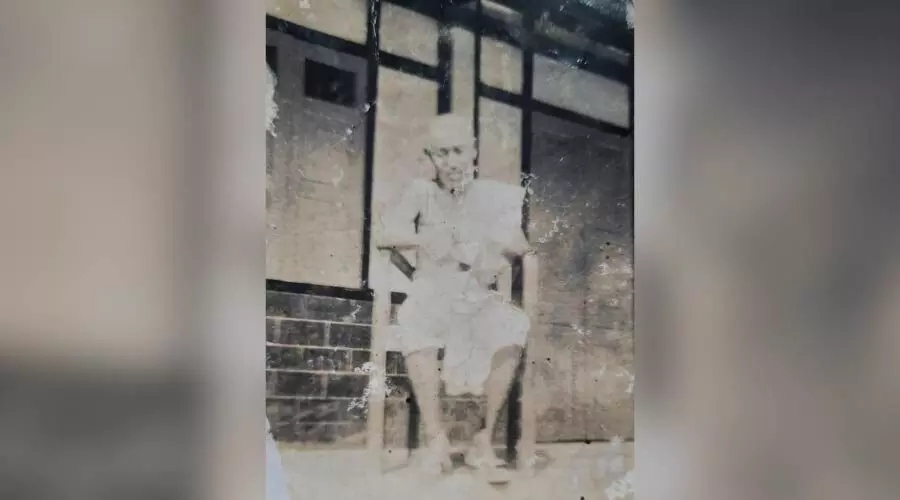
The only available photo of Hari Chandra Gogoi
Whenever we mention our ancestral village, Mayong, we are often asked about its legends of black magic and witchcraft. Another common question is how an Ahom family came to settle here. Before sharing the life story of our grandfather, Hari Chandra Gogoi, it is important to recount the history of our family's arrival in Mayong.
Family records trace our ancestry to Dharmadutta Gohain, who held the post of 'Morangi Khowa Gohain' the frontier governor of present-day Golaghat district bordering the Naga Hills during the Ahom reign in Assam.
He was succeeded by his son Jayadwaj Gohain, who also served in the same position and played a role in suppressing the first Moamoria Rebellion during King Lakshmi Singha's reign (1769-1780 CE).
Jayadwaj's son, Rahmon Gohain, was a close aide of King Chandrakanta Singha during the Burmese invasion of Assam (1817-1826 CE). He accompanied the king to Guwahati via the river Brahmaputra.
Later, Rahmon moved to Darrang. where he married Sanai from the Koch royal family. After Sanai's death, he married Jayanti. It was during this time that Rahmon met the King of Mayong during the latter's visit to Darrang for a matrimonial visit. Their acquaintance led Rahmon to relocate to Mayong, making him the first in our family to settle there.
From Jayanti, Rahmon had a son, Mulan Singh Gohain, krown locally as Tokari Bajuwa Burha (the old man with the lute) for his love of playing the instrument. Mulan Singh's son, Sivaram, worked as a clerk at Chandrapur Tea Estate. Tragically, Sivaram lost his two young sons, Shafiram and Betharam, likely due to cholera. He resigned from his job and returned to farming in Mayong.
It was during this period that our grandfather, Hari Chandra, was born to Sivaram Gohain in Raja Mayong village of present-day Morigaon district. As the only surviving son, Hari Chandra was raised with great care. His father spared aim from agricultural work and ensured that he received an education.
Sivaram helped to establish the Mayong Lower Primary School in 1904, where Hari Chandra later became a teacher. In his notebook, while recording his father's date of demise, Hari Chandra Gogoi mentioned his father's name as Sivaram Gohain, which might suggest that the family title was changed from Gohain to Gogoi by Hari Chandra himself for reasons best known to him.
Inspired by Manatma Gandhi's visit to Assam in August 1921, Hari Chandra joined the Non-Cooperation Movement. In December 1926, be attended the 41st Indian National Congress session held at Pandu near Guwahati (organised by prominent Assamese patriot Tarun Ram Phukan), alongside leaders like Mahatma Gandhi, Motilal Nehru, and Sardar Patel. He became a prominent Congress member in Mayong and actively worked for the freedom movement despite the risk of being a government employee.
During the Quit India Moverment of 1942, he collaborated with freedom fighters such as Mahendra Hazarika and Haladhar Bhuyan. He also had links with the group led by Bhibiram Bora and Mahadananda Dev Goswami, who famously derailed a British military train at Panbari near the Panikhaiti Railway Station on November 24, 1942. Due to insufficient evidence, the British could not make major arrests in that incident.
After Independence, Hari Chandra Gogoi continued to work for the people. In 1959, he became the first president of the Mayong Gaon Panchayat in accordance with the Assam Panchayat Act. Known for his honesty and generosity, he declined the pension offered to freedom fighters. Averse to publicity, he avoided photographs only one remains n in our possession.
Hari Chandra Gogoi passed away in 1978, leaving behind six sons and six daughters. In 1981, the Hari Chandra Gogoi Lower Primary School was established in his honour. Recently, the Mayong Anchalik College named its new indoor stadium after him.
As time passes, memories fade. Future generations may never truly grasp the hardships and sacrifices that freedom fighters endured for the independence we enjoy today. That is why the stories of lesser-known patriots like that of our grandfather Hari Chandra Gogoi, who served his nation with dedication while shunning fame and reward, must be told and remembered.
- Diganta Kumar Gogoi