
Centre approves transfer of 35 critically endangered vultures to Kaziranga division
The vultures will be transferred to the Bishwanath Wildlife Division, the sixth addition to the Kaziranga National Park (KNP) and Tiger Reserve.
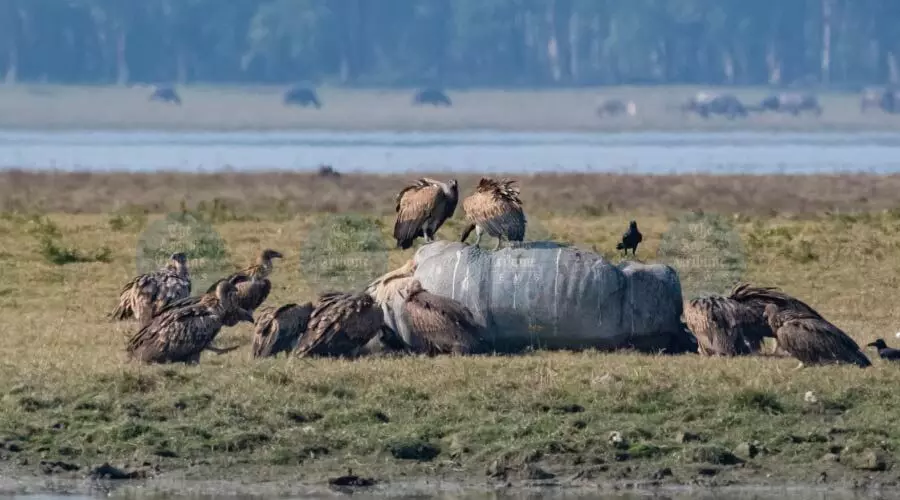
Both the slender-billed vulture and white-rumped vulture are classified as ‘critically endangered’
Kaziranga, Dec 11: The Central Zoo Authority (CZA), a statutory body of the Ministry of Environment, Forest and Climate Change (MoEFCC), Government of India, has approved the transfer of 30 white-rumped vultures and five slender-billed vultures from the Vulture Conservation and Breeding Centre at Rani, Guwahati.
The vultures will be transferred to the Bishwanath Wildlife Division, the sixth addition to the Kaziranga National Park (KNP) and Tiger Reserve.
Both the slender-billed vulture and white-rumped vulture are classified as ‘critically endangered’ on the International Union for Conservation of Nature, Red List. They are also protected under Schedule-I of India’s Wildlife Protection Act, 1972, offering the highest level of legal safeguards.
Assam serves as the primary stronghold for slender-billed vultures in India, hosting breeding populations, particularly near Kaziranga National Park. Their numbers, however, are on the decline due to threats like poisoning from pesticide-laced cattle carcasses.
White-rumped vultures are present across the State and face similar population crashes, prompting conservation efforts at sites like the Vulture Conservation Breeding Centre at Rani.
Vultures are often viewed as symbols of environmental balance and purity in rural communities. The veterinary drug diclofenac, used as a painkiller for livestock, has been reported to cause kidney failure and visceral gout in vultures scavenging on carcasses of animals treated with the drug. Widespread use of the drug across India, Pakistan and Nepal from the 1990s has led to high poisoning rates in vulture populations.
The Bishwanath Wildlife Division was selected as the release site due to its expansive forest landscape and abundant carrion resources. Ongoing anti-poaching measures and vulture-friendly veterinary practices further enhance its suitability, promoting natural foraging and nesting behaviours. A release aviary has also been constructed by the KNP authorities under the technical supervision of BNHS, near the Tewaripal forest camp, from which the birds will be released to the wild in the upcoming months.
Parallelly, awareness programmes on vultures, their biological importance and threats, etc., have been conducted for the local communities.
Correspondent