
Assam’s iconic mobile theatre Bhagyadevi shuts down after 57 glorious years
Mounting annual losses of Rs 30–40 lakh force Bhagyadevi’s producer to halt its historic journey
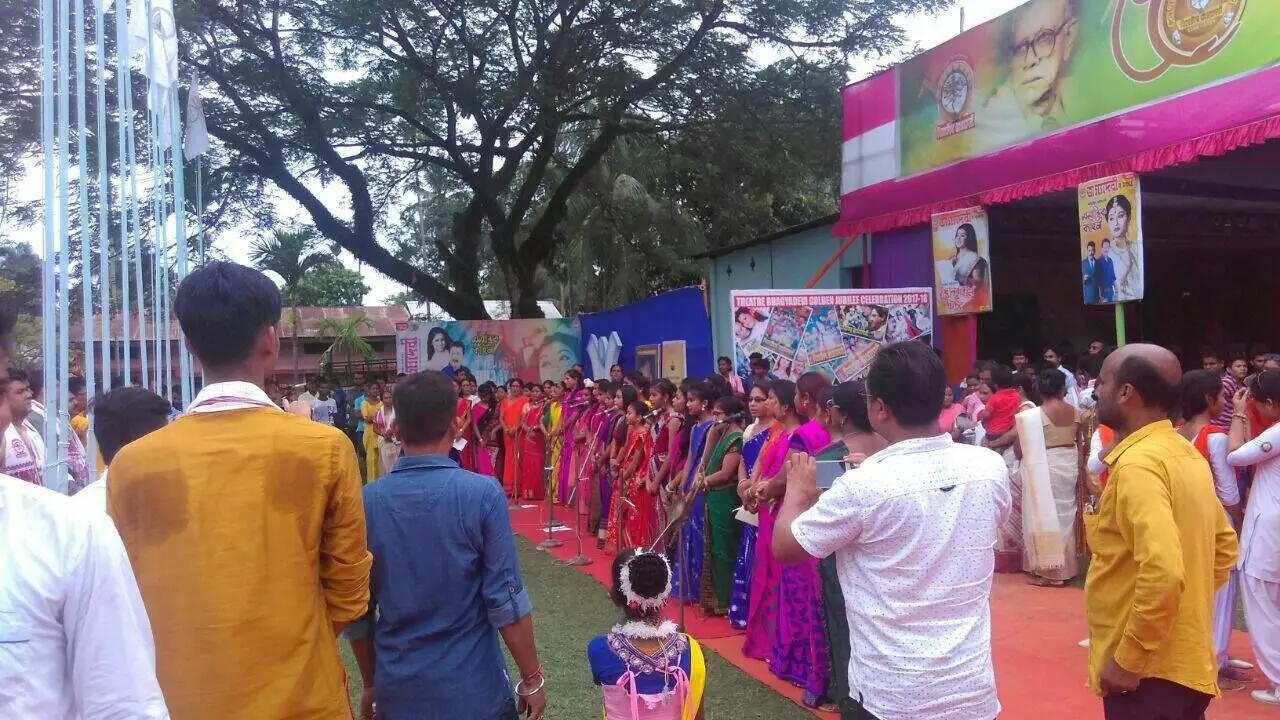
Golden jubilee celebrations of Theatre Bhagyadevi (Photo: Theatre Bhagyadevi / Meta)
Nalbari, July 1: In a sombre moment for Assam’s cultural landscape, one of the state’s oldest and most beloved mobile theatre groups, Theatre Bhagyadevi, has brought down its curtains after a remarkable 57-year journey.
Known as the pride of Nalbari and a household name among theatre lovers across Assam, Bhagyadevi’s closure marks the end of an era that once brought iconic performances to village fields and festival grounds, leaving audiences spellbound.
Founded by the late Sharad Majumdar, Theatre Bhagyadevi was a launchpad for some of Assam’s most celebrated actors.
Speaking to the press, current producer Subodh Majumdar, who inherited the troupe’s legacy from his father in 2002, shared the painful decision behind the closure.
“I’ve been facing losses continuously for the last 2–3 years. Earlier, they were manageable—around Rs 2–3 lakh. But now the deficit has grown to Rs 30–40 lakh annually. It’s simply unsustainable,” Majumdar said, his voice heavy with emotion.
He attributed the crisis to a flood of new mobile theatre groups cropping up across Assam every year, leading to intense competition.
“Earlier, businesses would support Bhagyadevi because it was a trusted name. Now they invest in newer troupes for novelty. We also have very few artists left on our stage—most have moved on to other platforms,” he added.
Over the decades, legends such as Biju Phukan, Pranjit Das, Champak Sharma, Jatin Bora, Ravi Sharma, Prastuti Parashar, Angoorlata, Akashdeep, Rajkumar, Gayatri Mahanta, Rag Anitem, and Minakshi Neog have graced Bhagyadevi’s stage, drawing packed crowds with unforgettable performances.
But today, that stage stands empty—not for lack of passion or talent, but due to a crippling lack of financial support.
Bhagyadevi’s legacy wasn’t just about big stars. Its plays—Churen Choror Putek, Milan Mala, Girip Garap Koina Ahi Se, and Rakt Bidhyut Pathak B.A.—etched themselves into the memory of generations.
For theatre enthusiasts in Assam, Bhagyadevi’s name evoked nostalgia, laughter, tears, and the excitement of houseful shows—an emotional connect that newer groups still struggle to recreate.
In his final appeal, Majumdar urged the government and the state’s cultural department to support the fragile world of mobile theatre—an art form that has carried Assamese culture to the remotest corners of the state for decades.
“The government must think about the people running these theatres. It’s not just about the artists on stage, but also about the livelihoods of over 120 workers and backstage crew. I’ll keep some lights and equipment, but bamboo poles and other tools can’t be stored forever. We need proper policy support to sustain this heritage,” he said.
Though Majumdar describes the closure as a temporary halt, the future remains uncertain. With no new invitations coming in and finances worsening, the entire theatre community is left with the ache of watching a beloved tradition quietly fade away.