
Assam issues new rules, to use AI cameras for monitoring elephants in conflict areas
The key components of the framework is formation of Gaja Mitra teams in adequate numbers in high-conflict districts.
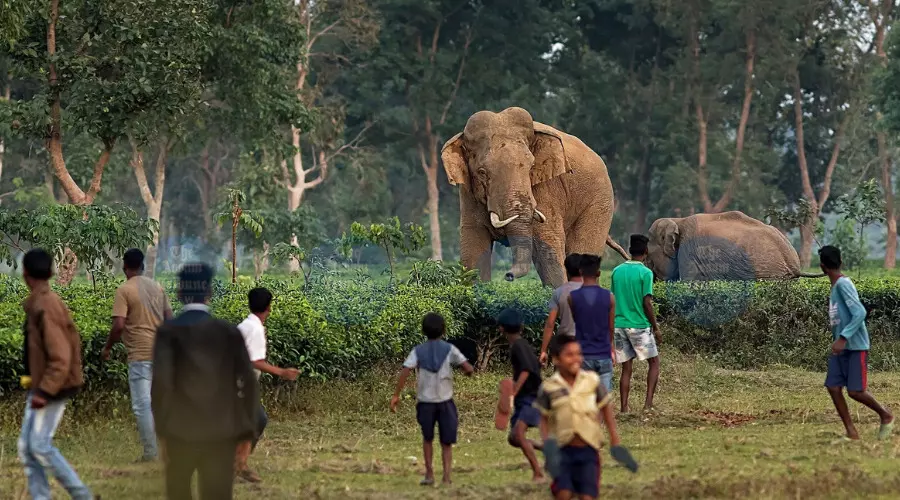
A file image of man-elephant conflict
Guwahati, Nov 24: With human-elephant conflict in Assam reaching a critical point, the government has issued a fresh set of guidelines “to ensure long-term coexistence by balancing conservation efforts with human development”.
The key components of the framework is formation of Gaja Mitra teams in adequate numbers in high-conflict districts, deployment of modern technologies like AI-based camera traps for real-time alerts and monitoring and creation of real-time information networks on elephant movement and facilitate rapid response.
A lump sum amount of Rs 500 per head per month will be provisioned to defray tea and refreshment cost of the Gaja Mitra members. Each of the Gaja Mitra team will be provided logistic support like torchlight, megaphone, field dress, shoes, crackers, etc. Any death of Gaja Mitras during elephant depredation will be treated as on duty and ex gratia of Rs 5 lakh will be given to the next of kin of the Gaja Mitra, a notification said.
For the convenience of affected villagers and the Gaja Mitra teams, watch towers will be erected at strategic locations to reduce damage to crops and monitor the movement of elephants. These watch towers will assist in acquiring and disseminating information regarding movement of elephant herds and act as early warning facility in the affected villages.
The action plan also envisages erection of temporary single-strand solar-powered fencing in order to guide elephants away from human habitation, by not blocking their traditional paths.
As part of the plan, cleaning and desiltation of existing natural water bodies will be taken up to make the natural water bodies accessible to the elephants. In places where natural water holes are not available, constructing water retention structures like ‘check dams’ and ‘water harvesting sarovars’ will be considered based on feasibility.
In areas where there is scarcity of water, saucer-shaped water holes along with a solar-powered water pump will be installed to create water sources within
forest and elephant movement areas.
The plan, to be monitored by a district-level committee chaired by the guardian minister, is proposed to be implemented for six months from October to March every year in areas where conflict is at peak and coincides with the paddy cultivation season.
The Compensatory Afforestation Fund Management and Planning Authority (CAMPA) Fund is proposed to be utilised for improving the sustainable ecosystem, including high feed-value plantations for elephants, along with other components proposed in the scheme.
This year alone, Assam has recorded 71 human casualties and 41 elephant deaths.