
AASU warns of downstream disaster risks as Subansiri Lower HEP nears commissioning
NHPC commences wet commissioning of first 250 MW unit at Subansiri Lower HEP, boosting operational readiness
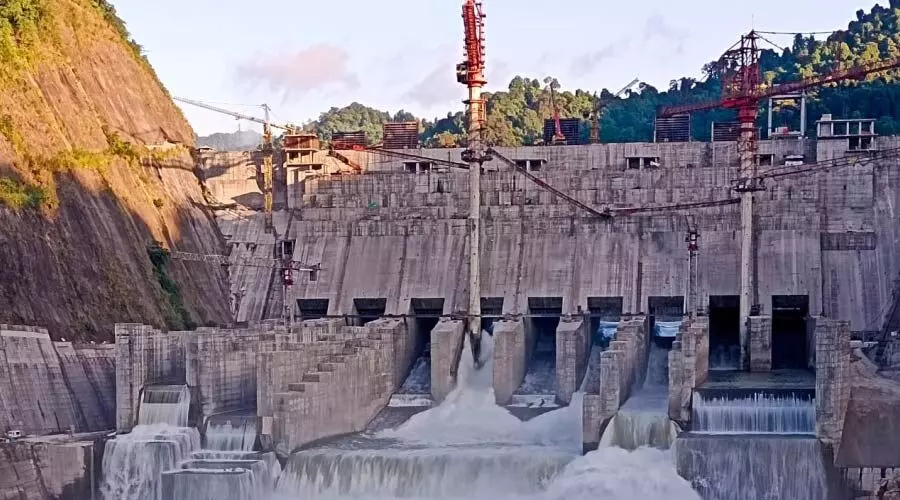
An image of Subansiri River 2000 Mega Watt Subansiri Lower hydro electric project. (photo:@arunachaltimes_/X)
Dhemaji, Oct 25: The All Assam Students’ Union (AASU) in Dhemaji has renewed its strong opposition to the Subansiri Lower Hydroelectric Project (HEP), warning of serious consequences for communities downstream as the country’s largest hydroelectric venture moves closer to commissioning.
Expressing frustration over what they describe as years of neglect and disregard for scientific cautions, AASU member Dipak Sarma said, “AASU has been saying from the beginning that this hydroelectric project will endanger the lives of the people of Assam and disrupt Assam’s culture. Scientists warned against building the dam here, but the government ignored those suggestions. Any lives lost downstream will be the government’s responsibility.”
He also criticised the timing of the final construction phase, noting that work progressed aggressively during sensitive periods—first amid the COVID-19 pandemic and now while Assam mourns the passing of cultural icon Zubeen Garg.
Meanwhile, the 2,000 MW Subansiri Lower HEP, located at Gerukamukh along the Assam–Arunachal Pradesh border, recently reached a major milestone with NHPC Limited commencing the wet commissioning of its first 250 MW unit.
This follows the successful mechanical run of the turbine, signalling the project’s operational readiness after years of interruptions.
NHPC Chairman and Managing Director Bhupender Gupta, along with senior officials, attended the commissioning ceremony. Once all eight units are operational, the Subansiri Lower HEP will become India’s largest hydroelectric installation, significantly contributing to national energy security.
Launched in January 2005, the project faced staunch protests and environmental objections, resulting in an eight-year halt between 2011 and 2019 over concerns about downstream impacts.
Construction resumed after NHPC implemented enhanced safety and mitigation measures.
Despite this progress, residents and activists in Assam’s riverine districts remain concerned. AASU has emphasised that the government must be held accountable for any disasters arising from the dam’s operation.