
876 bird species in Assam, 50 near-threatened: Ornithologist calls for action
Conservation issues include habitat loss, hunting & poaching & planned conservation strategy is needed for safeguard of birds
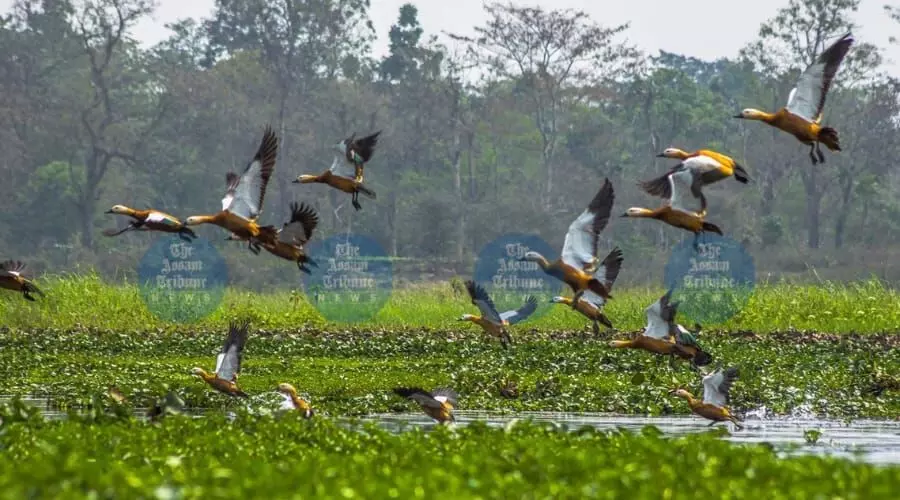
Guwahati, Aug 4: Assam is home to over 876 bird species including 290 migratory varieties and it needs a planned conservation strategy to safeguard its rich avifauna diversity; renowned ornithologist Anwaruddin Choudhury said.
Assam, despite being about 130 times smaller than the European continent, hosts nearly as many bird species (876 compared to Europe’s 930), Choudhury said; adding that the number rises to 982 when sub-species are included
He pointed out that so far, 12 ‘critically endangered’, 10 ‘endangered’, 31 ‘vulnerable’, 50 ‘near threatened’, and nine ‘restricted range’ species have been recorded in the State.
The main conservation issues in Assam are habitat loss and hunting, along with poaching, he pointed out.
“The felling of trees, shifting cultivation, clearance of forests for settlements and cultivation, mining for oil, coal, limestone and setting up of hydro-electric projects have resulted in habitat loss,” he said.
Currently, the existing protected area network covers 3,658 sq km or 4.6 per cent of the State’s land and “this should be extended wherever possible”, the ornithologist said.
There should be a planned conservation strategy, and it is recommended that some more protected areas be formed, he said.
“Smaller conservation reserves and community-run sanctuaries should be established in the sacred groves, village forests and in smaller reserved forests with the help of villagers,” Choudhury said.
Besides, in the protected areas, there is a need for better control of poaching and shifting cultivation, while environmental awareness should be increased in the villages surrounding these areas.
“Adequate protection to the existing protected areas, and stricter enforcement of the Wildlife (Protection) Act are also recommended, particularly outside the protected areas to prevent large-scale trapping of migratory waterfowl and also poisoning of birds,” the ornithologist said.
Burning of tall grasses, practised in the protected areas as part of conservation management, should be completed by January to avoid damage to the breeding of grassland birds, while plantation of trees in the grassland by forest and soil conservation departments should not be done, he said.
Choudhury also said priority must be given to further research to monitor population and movement of threatened and near-threatened species such as the white-winged wood duck, white-bellied Heron, spot-billed Pelican, Bengal Florican, Brown Hornbill and others.
Assam has the largest known population of the Bengal Florican, White-winged Wood Duck, Black-breasted Parrotbill, Swamp Francolin, Lesser Adjutant and Greater Adjutant in the world, but most of these are endangered, the retired bureaucrat said.
Of the total species, 290 are long-distance migrants, and for the bulk, Assam is their winter abode with the most conspicuous visitors being the waterfowl, especially ducks and waders, found around rivers and water-bodies, he said.
Most of the long-distance migrants to the State and other parts of the Northeast are from the northern latitudes, especially from China (Tibet, Manchuria and other areas), Mongolia and Russia (chiefly Siberia).
PTI