
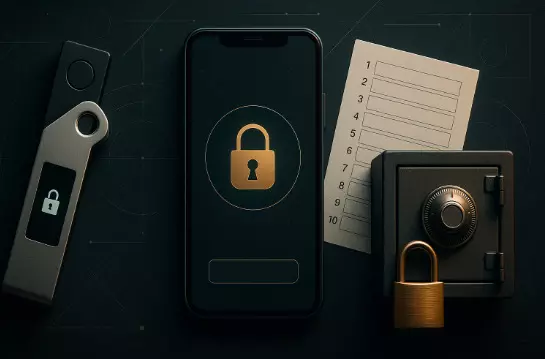
Cryptocurrency has become a mainstream financial asset, attracting both institutional and retail investors. Alongside its growth, however, comes an increasing wave of cyberattacks, scams, and user mistakes that lead to irreversible losses. Unlike traditional banking systems, there is no central authority to reverse a fraudulent transaction or recover stolen funds. This makes personal responsibility a critical part of owning digital assets.
This article provides a detailed guide on how to protect your cryptocurrency. We will examine the role of wallets, how to evaluate exchanges, and the most effective best practices to reduce risks. All recommendations are general security measures and not investment advice. Readers should always conduct their own research and evaluate personal risk tolerance before taking action.
Why Crypto Security Matters
The decentralized nature of cryptocurrencies empowers users to take control of their finances, but it also shifts accountability onto individuals. Once a transaction is confirmed on the blockchain, it cannot be undone. If private keys or seed phrases are lost, there is no recovery system.
Cybercriminals are well aware of this, and attacks are becoming more sophisticated. Phishing websites, malware that replaces copied wallet addresses, fake customer support scams, and large-scale exchange breaches have caused billions of dollars in losses over the past decade.
With global adoption accelerating, the attack surface grows larger. As of 2025, more than 420 million people hold cryptocurrencies, making them a significant target for organized crime groups as well as opportunistic hackers. Security in this space is not optional but essential.
Wallets Explained: Hot vs. Cold Storage
What Is a Hot Wallet?
A hot wallet is any crypto wallet that remains connected to the internet. Examples include web-based wallets, exchange accounts, and mobile apps. Hot wallets are convenient for everyday transactions, such as quick trades or small payments on pairs like DOGE USDT. However, their constant online presence makes them a frequent target for cyberattacks.
Hot wallets are best used for funds that you need to access regularly, similar to how you might keep a small amount of cash in a regular wallet for daily expenses.
What Is a Cold Wallet?
Cold wallets are offline storage solutions. Hardware wallets, paper wallets, and air-gapped devices fall under this category. Because they are not exposed to the internet, they provide a higher level of protection against remote hacking attempts.
Hardware wallets, in particular, are popular among long-term investors. They store private keys in a secure chip that never exposes sensitive data to external systems. While they require a small upfront cost, they are considered one of the most effective tools for safeguarding large or long-term holdings.
Choosing the Right Wallet for Your Needs
The decision between hot and cold wallets depends on usage. If you trade frequently or require quick access, a hot wallet provides convenience. For substantial portfolios or assets you intend to hold long-term, cold wallets are far safer. Many seasoned investors use a hybrid approach, keeping a small percentage of funds in hot wallets for liquidity while storing the majority in cold storage.
How to Use Exchanges Safely
Exchanges play a vital role in crypto, enabling users to buy, sell, and trade with global liquidity. At the same time, they are among the most common targets for hackers. Security-conscious users should carefully select which platforms to trust.
- Select a reputable platform: MEXC is an example of an exchange with a proven track record in transparency and security. It serves more than 36 million users worldwide, supports over 3,000 listed cryptocurrencies, and publishes bi-monthly Proof of Reserves reports to verify user funds are fully backed. Traders frequently rely on highly liquid pairs like BTC/USDT when moving funds on and off exchanges, as these pairs provide stability and deep market access.
- Limit balances on exchanges: Do not keep your entire portfolio in an exchange wallet. Only store what you need for trading, and transfer the rest to secure cold storage.
- Enable security features: Activate two-factor authentication (2FA) with authenticator apps or hardware tokens. Avoid SMS-based 2FA, which is vulnerable to SIM-swapping. Use withdrawal address whitelists and IP whitelists to restrict unauthorized access.
- Beware of phishing threats: Double-check URLs before logging in. Only download mobile apps from official sources. Many scams impersonate trusted brands to steal login credentials.
By combining platform-level protections with user awareness, you can significantly lower risks when interacting with exchanges.
Best Practices to Keep Your Crypto Secure
Even the most secure wallets and exchanges cannot compensate for weak personal habits. The following practices form the foundation of crypto self-defense:
- Enable two-factor authentication: Always use app-based or hardware-based 2FA for your accounts.
- Use strong, unique passwords: Rely on password managers to generate and store complex credentials. Avoid reusing passwords across multiple platforms.
- Protect seed phrases: Write recovery phrases on paper or store them in offline devices. Never upload them to cloud services, email accounts, or smartphone notes.
- Diversify holdings: Spread assets across multiple wallets to reduce the impact of a potential breach.
- Regularly monitor accounts: Check transaction history and set alerts for unusual activity. Many exchanges, including MEXC, provide monitoring tools and notifications.
- Secure your network: Use a VPN or trusted private connection when managing wallets or logging into exchanges. Public Wi-Fi introduces unnecessary risks.
- Test recovery procedures: Practice restoring small amounts from backup phrases or hardware wallets. This ensures you know how to respond if your primary device is lost.
- Consider multi-signature wallets: For higher-value holdings, multi-signature setups require approvals from multiple devices, making unauthorized transfers much harder.
Common Mistakes to Avoid in Crypto Security
Many losses occur not because of advanced hacks but because of simple user mistakes. Avoid the following pitfalls:
- Reusing passwords across platforms or choosing weak credentials.
- Saving private keys, passwords, or seed phrases in unsecured digital formats.
- Falling for phishing emails, fake customer support messages, or malicious browser extensions.
- Ignoring software updates for wallets, exchanges, or operating systems. Outdated software often contains unpatched vulnerabilities.
- Leaving large sums on exchanges indefinitely instead of transferring them to secure wallets.
These mistakes are preventable with vigilance and discipline. Treat your crypto like valuable property and build habits that minimize risk.
Building a Crypto Security Mindset
Security is not a one-time checklist but a continuous process. The technology and tactics used by cybercriminals evolve constantly. Adopting a security mindset means staying informed, keeping systems updated, and questioning suspicious requests or websites.
Exchanges like MEXC continue to strengthen their defenses through liquidity depth, proof-of-reserve transparency, and advanced account protections. Yet ultimate responsibility rests with individual users. Combining institutional safeguards with strong personal practices is the most reliable way to reduce risk.
Conclusion
Securing cryptocurrency requires a layered approach. Choosing the right wallet, practicing safe exchange habits, and applying proven best practices can dramatically lower risks of theft or loss. By avoiding common mistakes and adopting a proactive security mindset, you retain greater control over your digital assets.
Ready to take control of your crypto security? MEXC gives you the tools to trade smarter and safer, with industry-leading liquidity, transparent Proof of Reserves, and some of the lowest fees in the market. Join more than 36 million users worldwide who already trust MEXC to protect their assets. Create your account on MEXC today and secure your place in the future of digital finance.
(The views, opinions, and claims in this article are solely those of the author’s and do not represent the editorial stance of The Assam Tribune)